
Custom Outdoor LED Rigid Bars for HyperMax Roofline Lighting in Bahrain
iPixel LED supplied custom outdoor LED rigid bars to the lighting contractor for a HyperMax by Majid Al Futtaim building in Bahrain. The bars were used along the building’s upper outline, where the contractor needed a diffused lighting effect, minimal dark gaps between sections and longer distances between power-feed points.
High temperatures and strong UV exposure were central concerns in the brief. The supplied construction included an aluminum housing, a PC diffuser, adhesive sealing and cable assemblies with a rubber protective layer and added UV protection.
Installation was completed on October 30, 2025, following approximately two weeks of on-site work. At the latest project follow-up provided for this case study, the installation was reported to be operating normally.
Project Overview
| Item | Details |
|---|---|
| Location | Kingdom of Bahrain |
| Project | HyperMax by Majid Al Futtaim |
| Application | Building roofline and upper contour lighting |
| iPixel LED’s role | Custom LED rigid bar supplier |
| Direct customer | Lighting contractor responsible for system supply, installation and after-sales service |
| Housing and cover | Aluminum housing and PC diffuser |
| Outdoor sealing | Adhesive sealing |
| Cable protection | Rubber protective layer with added UV protection |
| Typical power-feed spacing | 10–15 m |
| Maximum reported power-feed spacing | 20 m in the project configuration |
| Internal testing reported | 24-hour UV test; 80°C high-temperature test for 72 hours |
| Installation completed | October 30, 2025 |
| Latest reported status | Operating normally |
Why the Project Required Custom LED Bars
The contractor’s requirements extended beyond finding a bar of the right length. The exposed installation raised concerns about heat, sunlight and the reliability of the PC material and cable connections. Material discoloration under UV exposure was a particular concern.
Appearance also mattered. The contractor wanted individual LED points to blend into a diffused line of light, with very small dark interruptions where neighboring bars met. Along a building outline, repeated joints influence the appearance of the whole installation.
Finally, the contractor wanted longer intervals between power-feed points. This brought voltage drop and the electrical layout into the same discussion as the housing, diffuser and connections.
Material Protection and Internal Testing
The supplied bars combined an aluminum housing with adhesive sealing for outdoor use. The cable assemblies had a rubber protective layer with added UV protection, addressing the contractor’s concern about exposed connections.
iPixel LED reports conducting internal UV testing for 24 hours and high-temperature testing at 80°C for 72 hours. These figures describe internal evaluation conditions. They do not establish an 80°C continuous operating rating or a specified outdoor service life. A formal UV test report is not available for this case study.
For a similar application, the final assembly and its validation requirements should be assessed against the installation environment.
A Diffused Roofline with Minimal Joint Interruptions
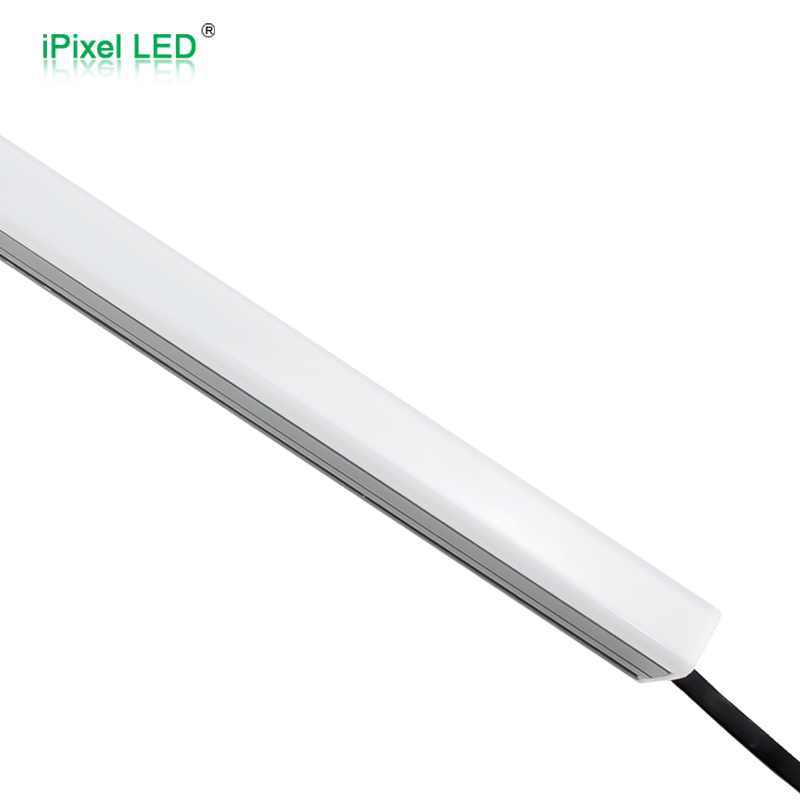
The visual brief called for a diffused appearance without conspicuous individual LED points. A PC diffusing cover formed part of the product construction.
Minimizing the dark area between adjoining bars was another customization requirement. It needed to be considered alongside the appearance of each illuminated section, rather than assessing individual bars in isolation.
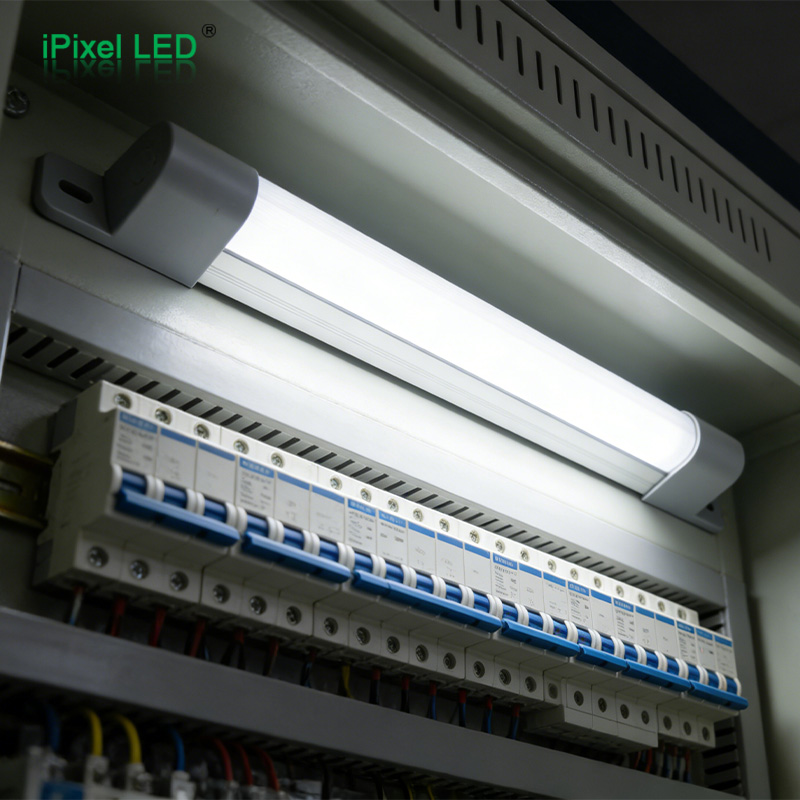
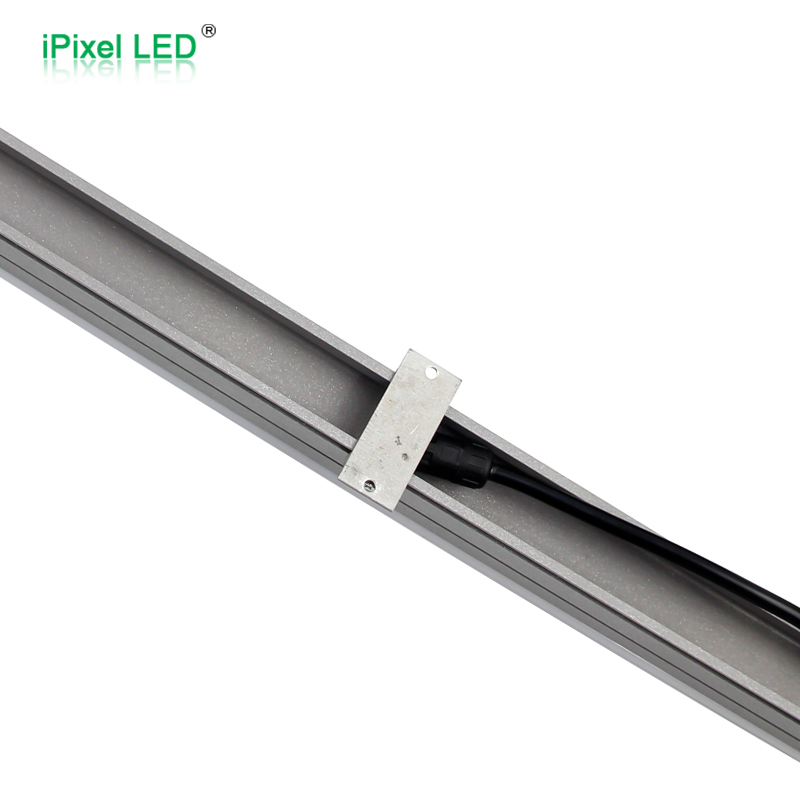
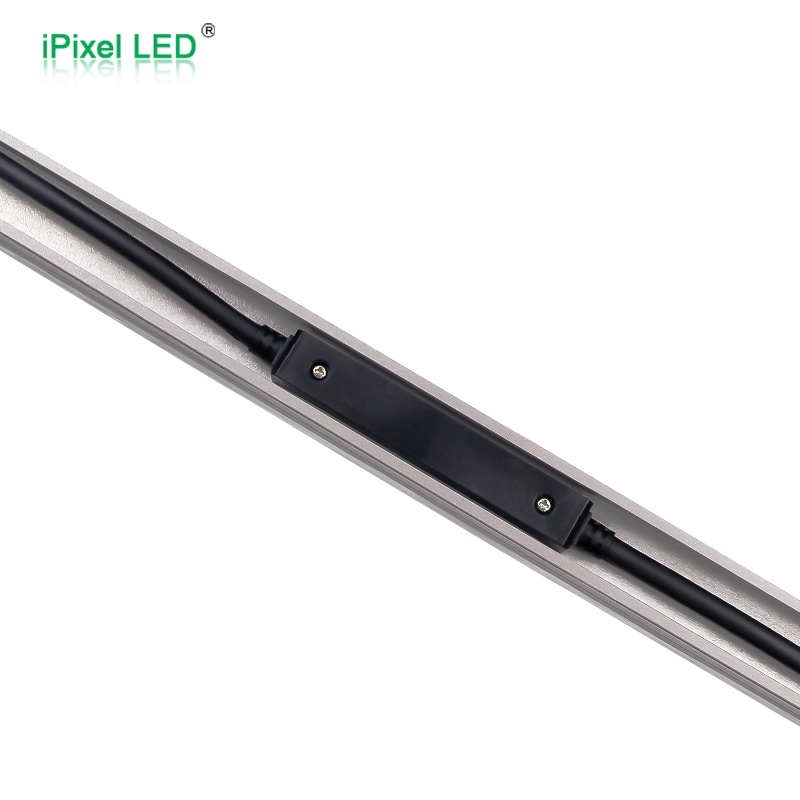
The supplied site photograph shows the lighting following the building’s upper outline. Product photographs illustrate the diffuser, aluminum housing and rear connection details. These images provide visual context; no measured joint-gap or lighting-uniformity result is claimed here.
Power-Feed Spacing of 10–15 Meters, with a Reported Maximum of 20 Meters
The supplier reports typical power-feed spacing of 10–15 meters for this project, with a maximum of 20 meters in the project configuration.
This addressed the contractor’s requirement for longer intervals between feed points along the roofline. Voltage drop remained an important consideration in defining the electrical arrangement.
The reported 20-meter spacing is specific to this configuration. For another installation, supply voltage, connected load, cable size and feed arrangement need to be reviewed before confirming the distance. Providing the desired feed spacing early helps define a workable product brief.
Installation and Follow-up
The contractor handled installation and after-sales service, while iPixel LED supplied the custom bars. On-site installation took approximately two weeks and was completed on October 30, 2025.
The latest project feedback reports normal operation. This field feedback complements the internal evaluation, although it does not provide quantified measurements of light-output retention or material discoloration.
Discuss Your Outdoor LED Bar Requirements
For a similar roofline or architectural contour application, send iPixel LED your installation drawing, required dimensions, total lighting length and preferred lighting effect. Include the outdoor conditions, available power locations and desired distance between power-feed points.
This information helps our team assess the housing, diffuser, connection arrangement and electrical configuration for your project.
Frequently Asked Questions
What did iPixel LED supply for this project?
iPixel LED supplied custom outdoor LED rigid bars to the lighting contractor. The contractor was responsible for system supply, installation and after-sales service.
How far apart were the power-feed points?
The reported spacing was typically 10–15 meters, with a maximum of 20 meters in this project’s configuration. Other applications require a separate assessment of the electrical layout.
What internal testing was reported?
iPixel LED reports a 24-hour UV test and a high-temperature test at 80°C for 72 hours. These test conditions should not be interpreted as a continuous operating-temperature rating or service-life guarantee.
When was the lighting installed?
Installation was completed on October 30, 2025, after approximately two weeks of on-site work. The latest follow-up provided for this case study reports normal operation.