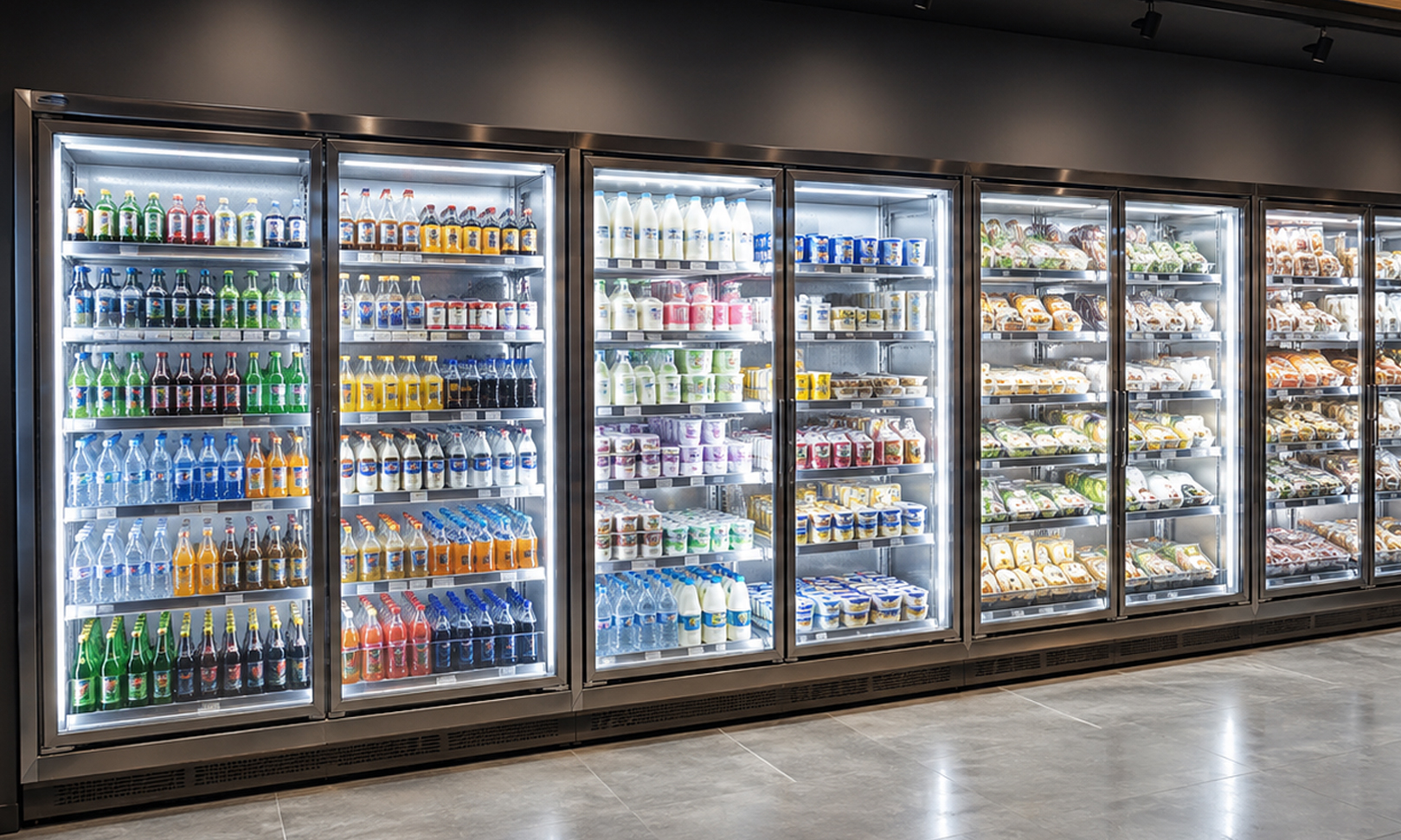
Refrigeration Lighting – Low-temp, Condensation & Cleaning Reliability
Engineering methods to reduce early failures caused by condensation, moisture ingress, corrosion, and long-run voltage drop in glass-door coolers and display cabinets.
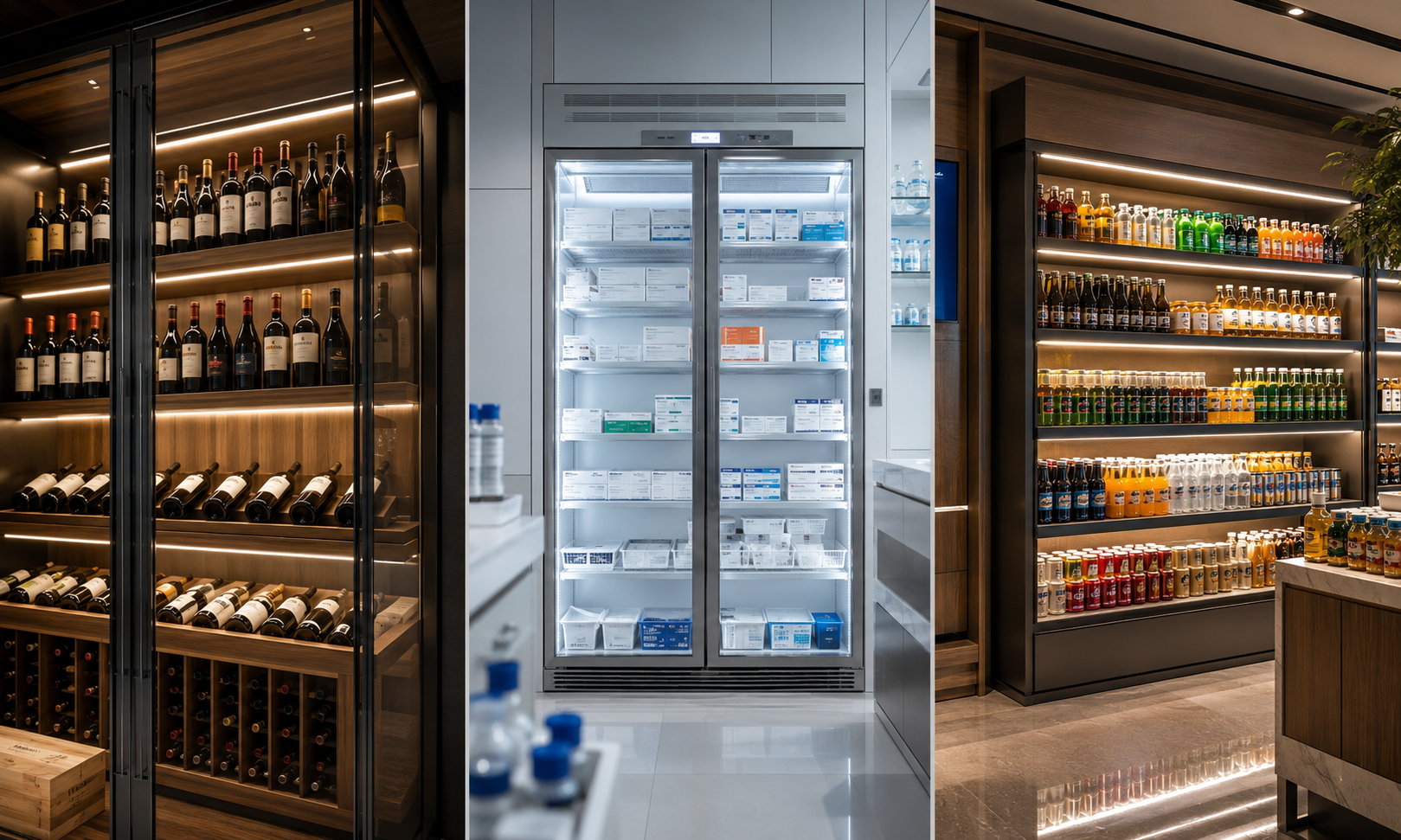
Where This Lighting Is Used
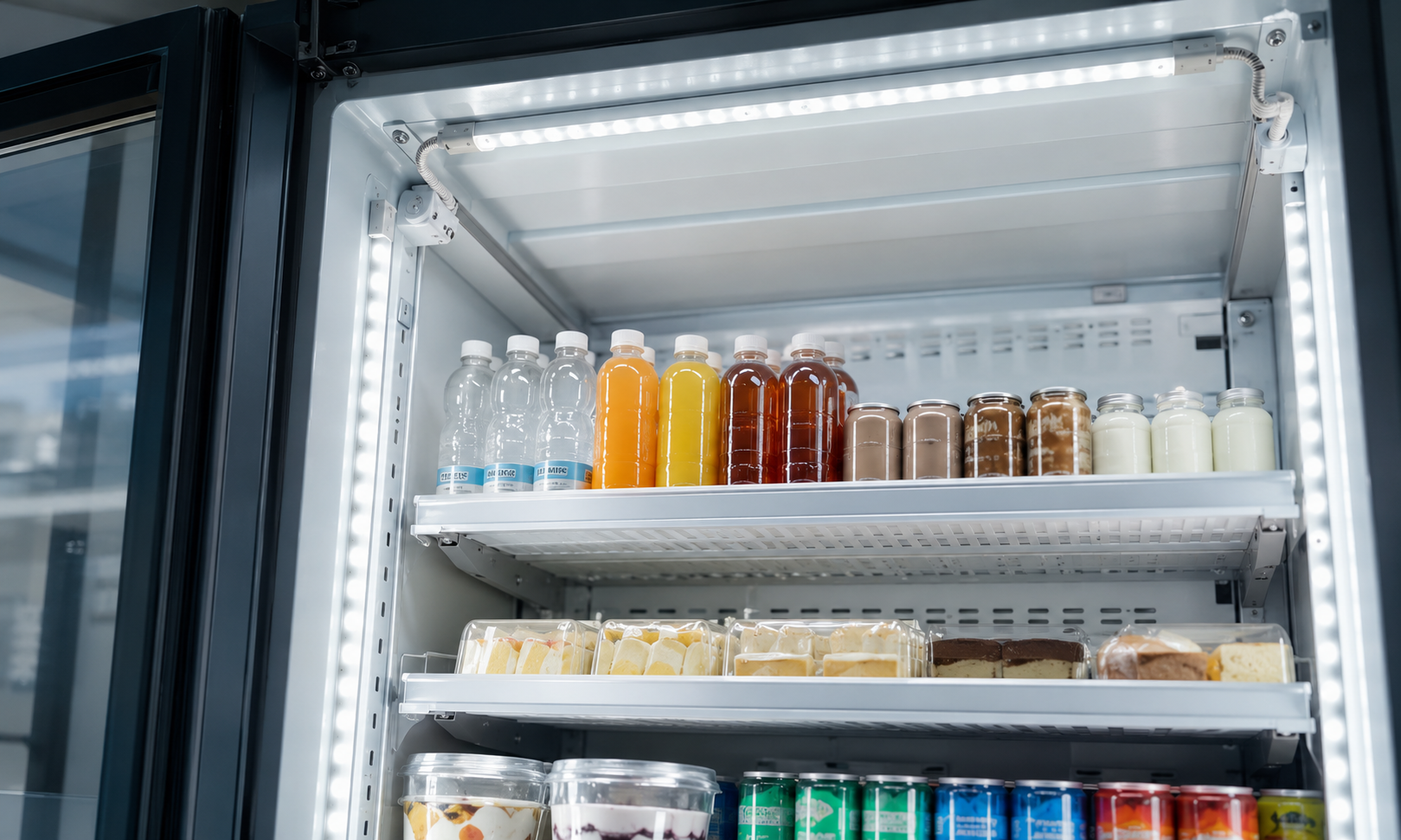
- Rigid LED light bars installed on both sides and the top inside commercial coolers / display cabinets
- Operating temperature: +1°C to +5°C (continuous); high humidity and condensation risk
- Power: 12V or 24V DC; no controller (simple on/off via cabinet system)
- Typical constraints: deep cabinet depth; need higher center brightness and better vertical coverage
- Exposure: condensation (avoid direct steam/cleaner exposure inside cabinet)
- Mounting: clips + screws (corrosion-resistant hardware)
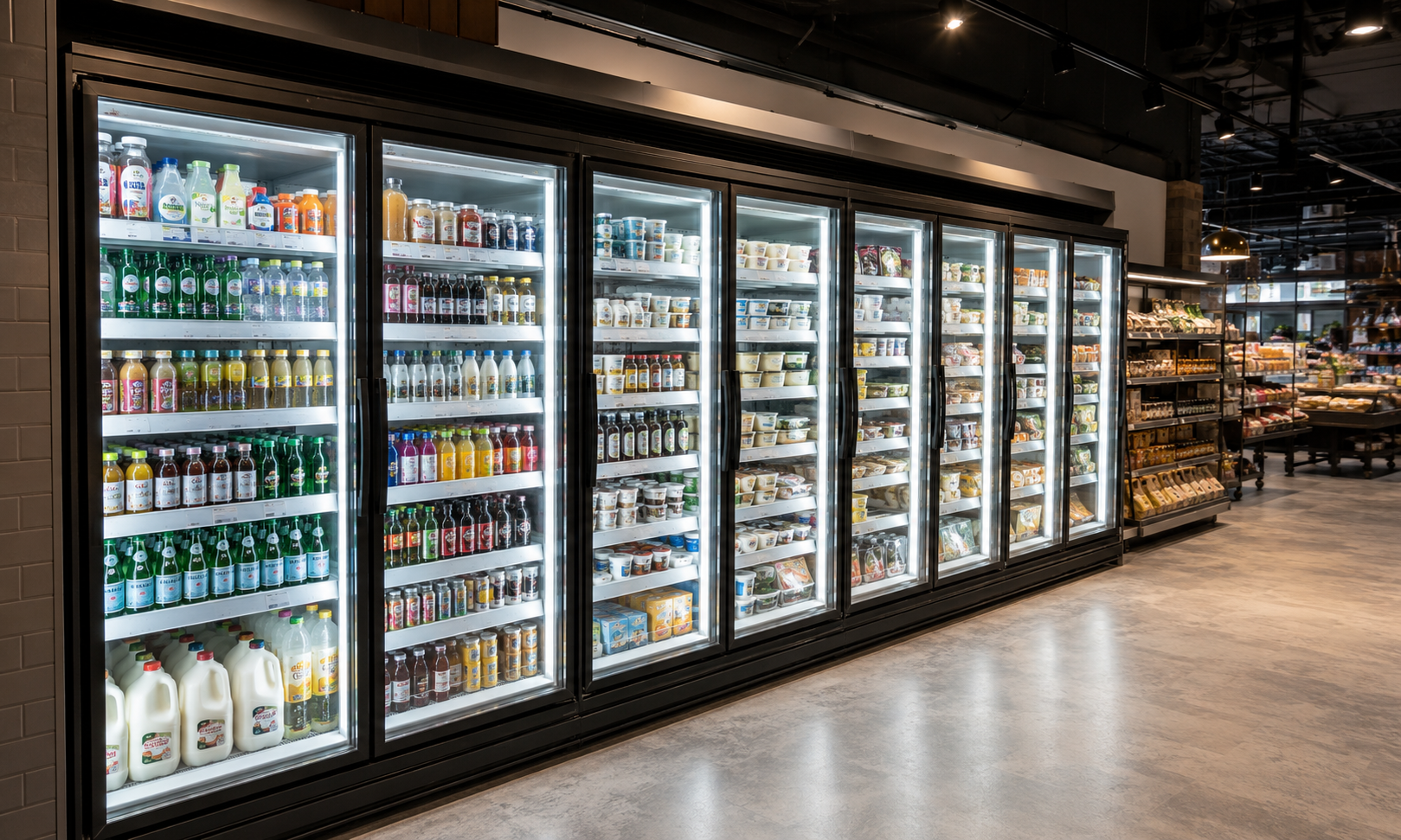
What This Refrigeration Lighting Solution Delivers
- Goal: bright, uniform illumination in deep coolers with low failure rate under condensation conditions.
- Core risks: moisture ingress into bars/connectors, corrosion of mounting hardware, long-run voltage drop reducing far-end brightness.
- Deliverables: sealed light bar + corrosion-resistant mounting + wiring plan + validation pack for mass production.
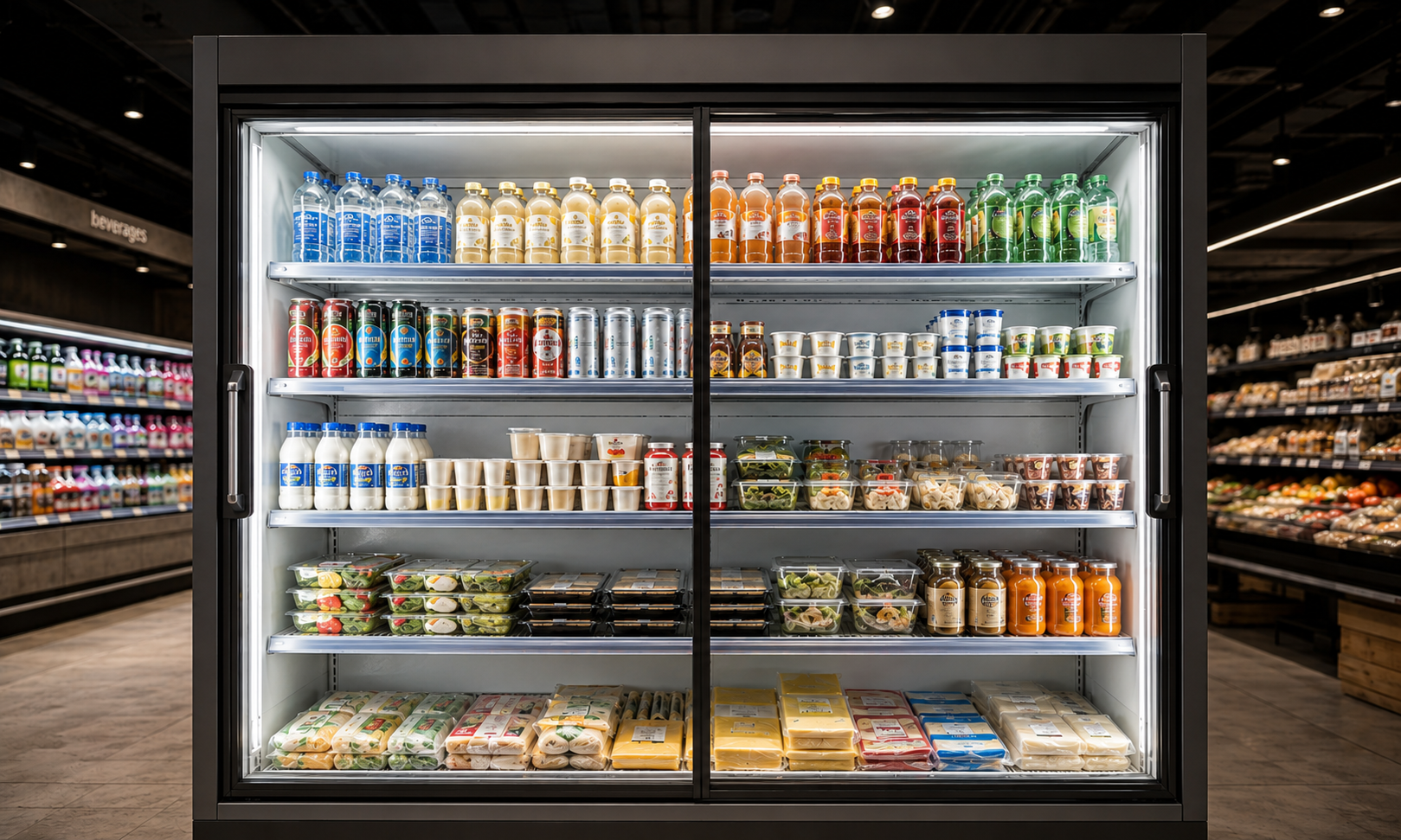
Project Inputs We Need
- Mechanical drawing / installation positions + cable routing
- Operating environment (temperature range, humidity/condensation, cleaning agents)
- Power (voltage, driver location) and control method (if any)
- Target brightness + uniformity acceptance
- Optical requirements (dotless / light-guide / glare limits), CCT/CRI, color tolerance (SDCM if needed)
- Serviceability requirement (replaceable modules vs permanent install)
- Target market, applicable standards and required compliance documentation
- Estimated annual volume and sample plan
- Cabinet depth and door type; installation surfaces (metal/plastic) and any anti-fog/defrost cycle info
- Cleaning / chemical exposure list (if any): alcohol, detergents, oil fumes/mist, steam, smoke; frequency and method
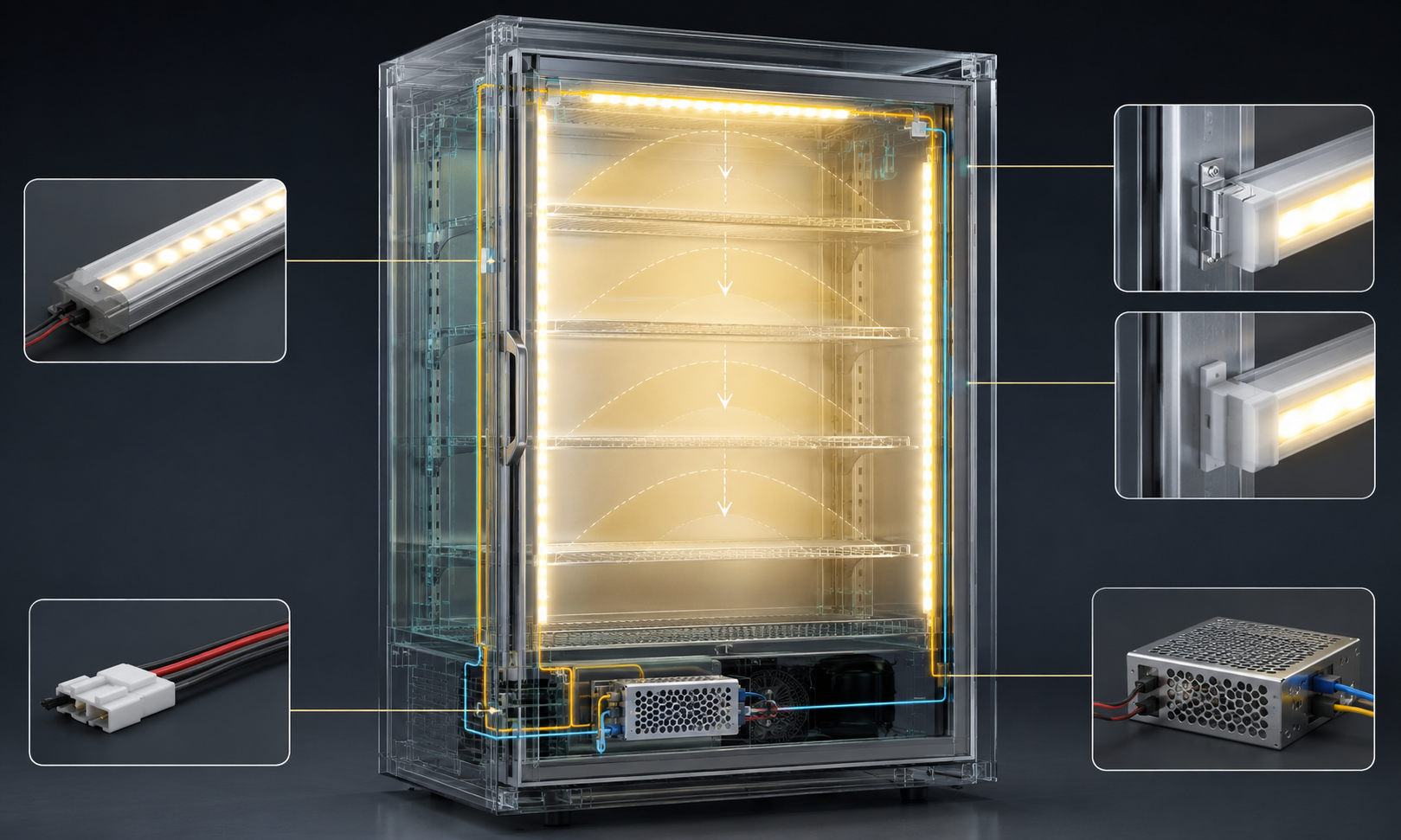
Common Refrigeration Lighting Challenges We Solve
- Water vapor enters the light bar and causes early failure
- Brightness is insufficient in deep cabinets (poor illumination effect)
- Screws/clips rust and reduce durability
- Need to meet applicable market and product-specific compliance requirements
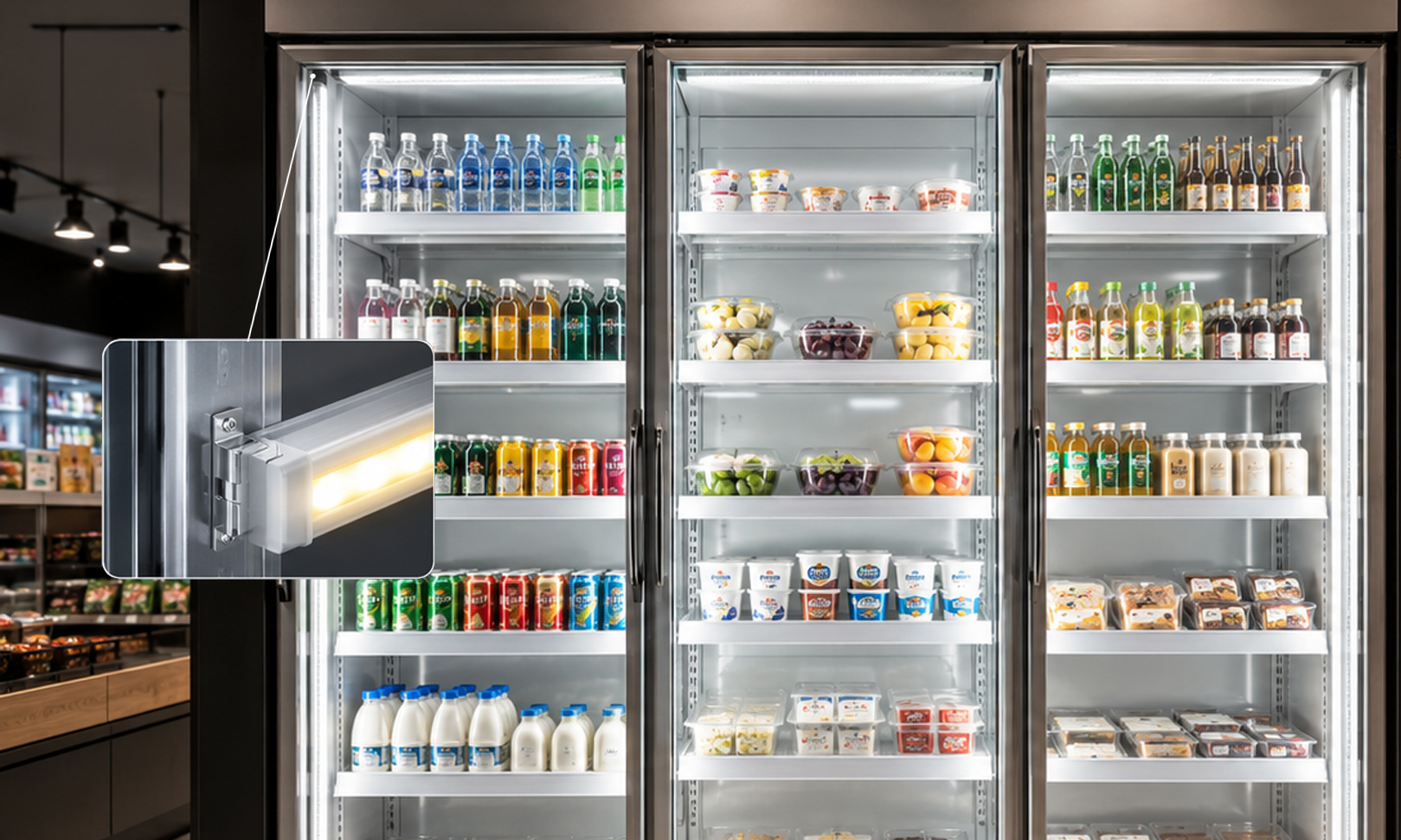
Engineering Controls for Reliable Refrigeration Lighting
- Sealing strategy: seal end caps and cable-entry points; prevent capillary paths; define sealing CTQs in process QC
- Condensation robustness: protect solder joints; moisture barrier where needed; avoid unprotected openings
- Corrosion-resistant hardware: specify stainless/coated screws and clips; salt/condensation exposure considerations
- Brightness planning for deep cabinets: optical distribution / placement guidance; select higher efficacy output and verify center illuminance
- Voltage drop control: wire gauge + max run length; multi-point injection if required; connector temperature rise control
- Change control: lock critical materials (sealant, gasket, cable, connector) under ECN/PCN
- Material resistance: select jacket/sleeve, coating, adhesive, and connector materials to resist listed exposure (steam / cleaners / alcohol / oil fumes) and prevent corrosion
- Mounting rule: Mounting: clips + screws (corrosion-resistant hardware)
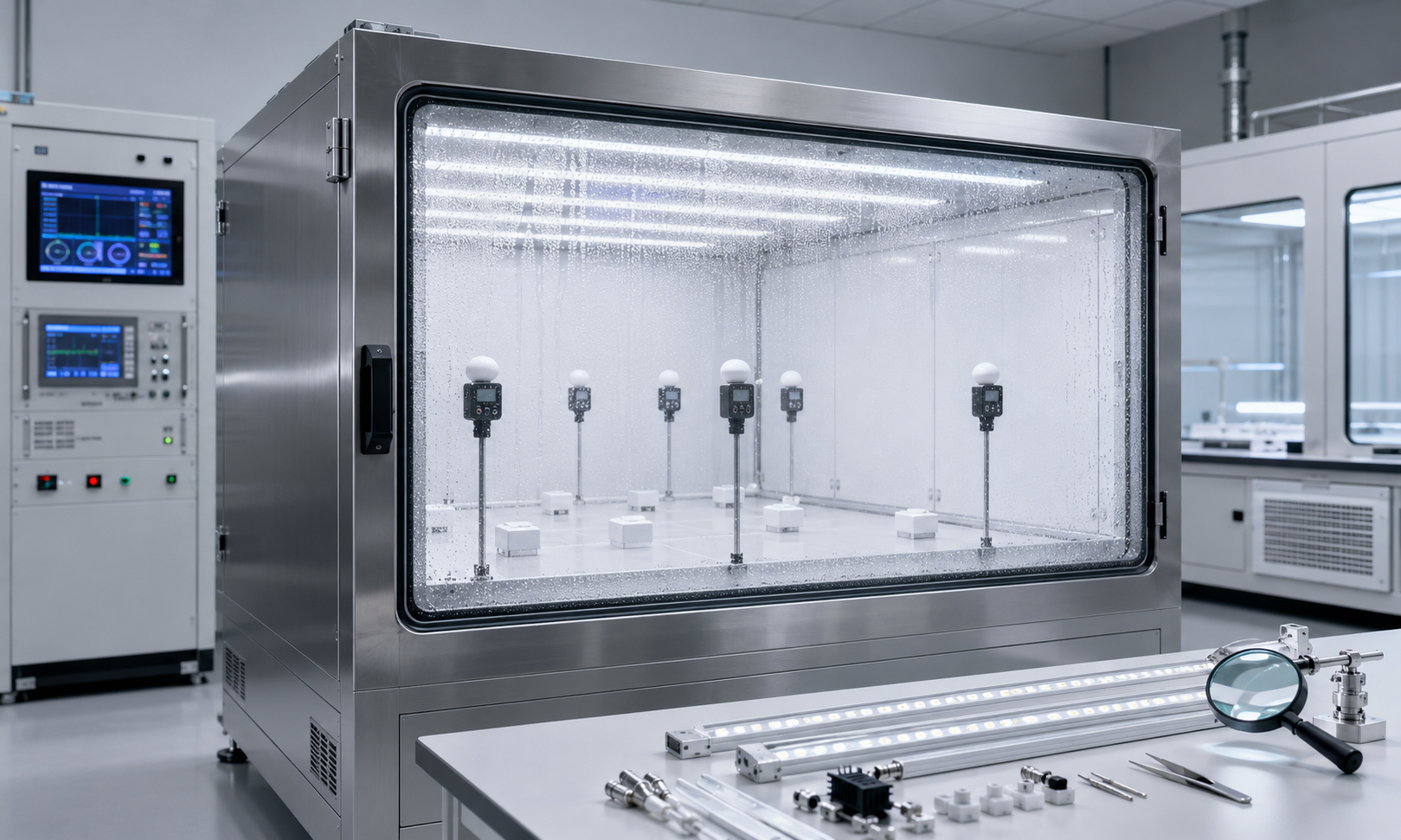
Validation and Testing
- Condensation / humidity cycling | Pass: no moisture ingress; stable output; no corrosion-induced intermittence
- Low-temp operation soak (+1~+5°C) | Pass: stable output; no sealing crack/adhesion issues
- Brightness / uniformity check in deep cabinet | Pass: meets agreed illuminance / uniformity
- Hardware corrosion screening (as required) | Pass: no functional failure / severe rust
- Voltage drop / connector temp rise at max run | Pass: within agreed limits
- Chemical/steam exposure check | Condition: project-defined wipe/steam cycle | Pass: no delamination, no corrosion, stable output
Compliance and Documentation
Compliance support for refrigeration lighting projects
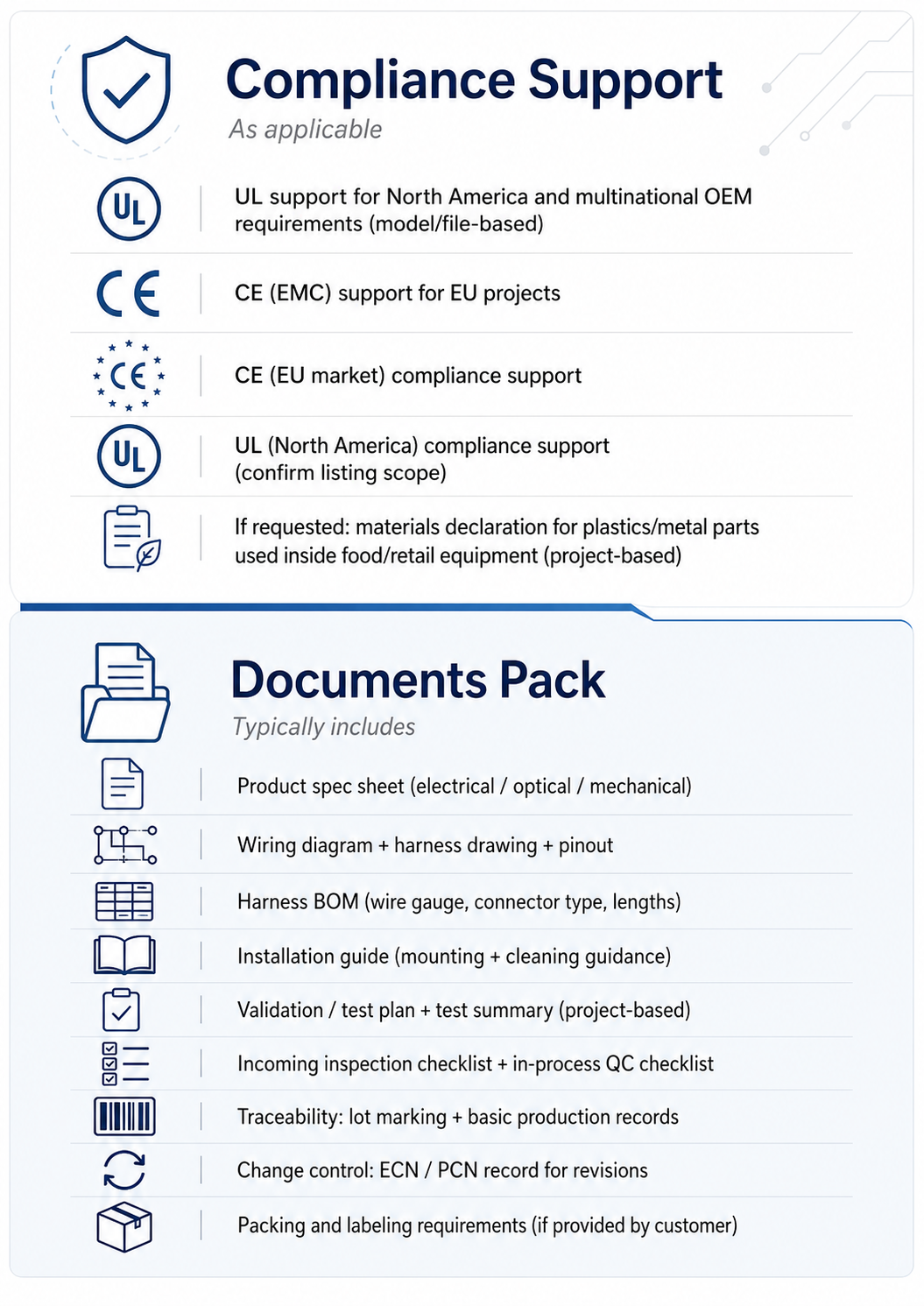
Compliance documentation is reviewed on a project basis. The applicable requirements depend on the final product model, rated voltage, driver and control arrangement, wiring harness, connectors, installation conditions and target market.
Where an existing certificate, test report or material declaration applies to the relevant product model or component, we can confirm its documented scope and provide the appropriate supporting information. For a complete refrigerated cabinet or integrated appliance, final system compliance must be confirmed against the final configuration by the responsible system manufacturer or brand owner.
Documents pack typically includes:
- Product spec sheet (electrical/optical/mechanical)
- Wiring diagram + harness drawing + pinout
- Harness BOM (wire gauge, connector type, lengths)
- Installation guide (mounting + cleaning guidance)
- Validation / test plan + test summary (project-based)
- Incoming inspection checklist + in-process QC checklist
- Traceability: lot marking + basic production records
- Change control: ECN/PCN record for revisions
- Packing and labeling requirements (if provided by customer)
Related Applications and Products
Frequently Asked Questions
Q: How do you prevent moisture ingress in low-temperature cabinets?
- We control sealing at end caps and cable entry points and validate with condensation cycling.
Q: How do you improve brightness for deep cabinets?
- We optimize optical distribution/placement and verify illumination in the worst-case cabinet depth.
Q: What compliance documentation can you support for refrigeration lighting projects?
- We review documentation requirements based on the final product model, voltage, driver and control configuration, target market and applicable standard. Where existing certification, test or material documentation applies, we confirm its exact scope and provide the relevant support information. Final compliance for a complete refrigerated cabinet or integrated system must be confirmed for the final configuration.