
Project-specific LED lighting components for equipment manufacturers
Every OEM project can involve different product structures, lighting effects, installation methods, operating environments and compliance requirements. iPixel provides project-based design for SMD flexible LED strips, COB flexible LED strips, SMD rigid LED bars, COB rigid LED bars, neon flex and custom PCB light source boards.
Customization can cover strip length and width, operating voltage, FPC/PCB layout, LED package and density, CCT, CRI, power, cutting unit, cable length, connector type, waterproof structure and mounting method. The purpose is not simply to change specifications, but to make the LED component fit the customer's product structure, assembly process and application requirements.
For equipment OEMs, those requirements often extend beyond the light source itself: cable routing, mating connectors, conductor assignments, product identification, installation details and repeat-order configuration all matter. The following real assembly example shows how these requirements can be translated into a finished component.
Beyond Standard LED Strip Specifications
An LED strip that works on a laboratory bench may not be ready for assembly into a commercial machine. Depending on the equipment, the specification may also need to define electrical interfaces, wiring harness length, connector type, wire routing, identification labels, insulation details and mounting preparation.
iPixel's customization scope includes both the LED light source and the assembly features needed for integration into OEM equipment. Our engineering team can review drawings, existing samples or installation constraints to determine which details should be defined before prototyping.
Real Engineering Example: A Pre-Wired Addressable RGB LED Assembly
Featured application: a customized low-voltage LED component for equipment integration.
The example below uses a real 12V addressable RGB LED strip assembly with a multi-conductor harness, defined connector interface, cable organization and product identification. The original engineering drawing and finished-product photographs show why an OEM lighting component is more than a standard LED strip cut to length.
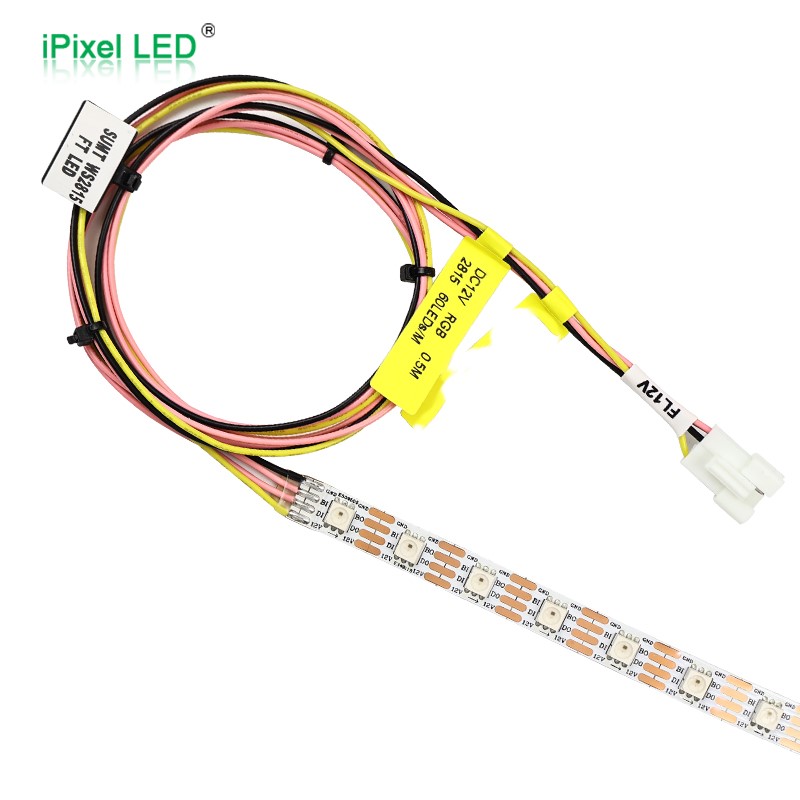 Customized 12V addressable RGB LED assembly with pre-configured wiring, connector and labeling.
1. Translating OEM Drawings into Assembly Requirements
The supplied engineering drawing defines a specified LED section, a cable-and-connector assembly, wire functions, identification markings, cable restraints and insulation requirements for certain soldered areas. Each item affects installation compatibility and the customer's assembly process.
For the equipment manufacturer, the supplier's task is to interpret these requirements together rather than treating LED specifications and harness specifications as unrelated items.
2. Electrical and Mechanical Interface Configuration
This assembly uses 12V addressable RGB technology with data and backup-data signal connections. The drawing sets out the wiring interface and a multi-conductor harness leading to an equipment-side connector.
By building the harness into the supplied component, the lighting assembly can be matched to the customer's designated connection and installation arrangement. Cable length, conductor identification, connector compatibility and the transition to the flexible LED strip must be assessed as one assembly.
3. Wiring, Labeling and Assembly Details
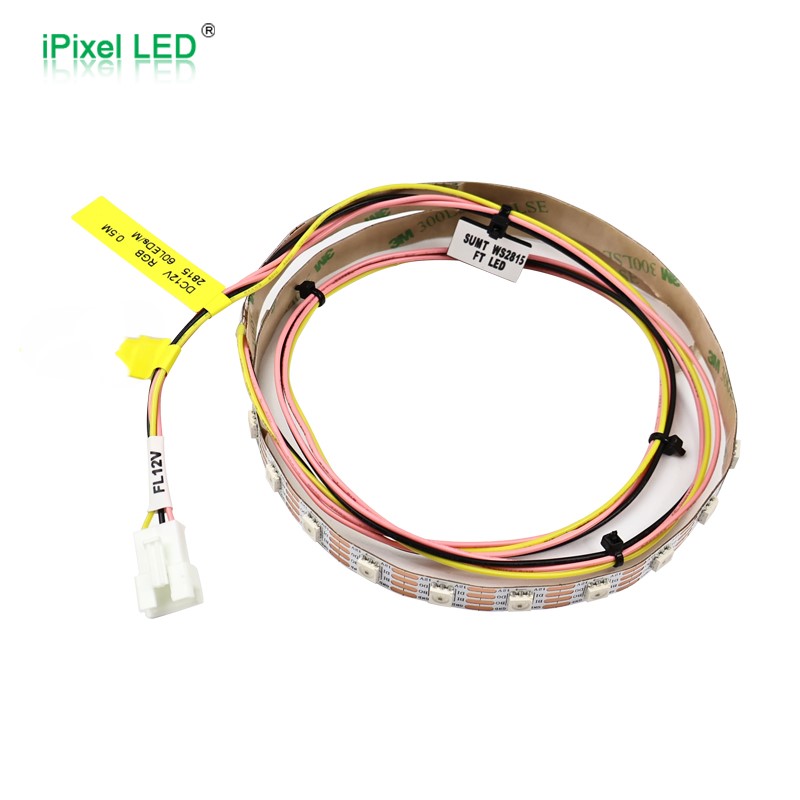 Wiring harness, connector, identification labels and cable organization.
The four actual product photographs show a wiring bundle, a plug connector, cable ties, multiple identification labels and adhesive backing on the LED strip.
The customer drawing also identifies conductor functions and calls for insulation at specified soldered locations. These details are important to product identification, installation readiness and correct interfacing with the host equipment.
The intended configuration should be established from the approved drawing and physical sample, rather than inferred from a generic strip data sheet.
4. Functional and Optical Evaluation
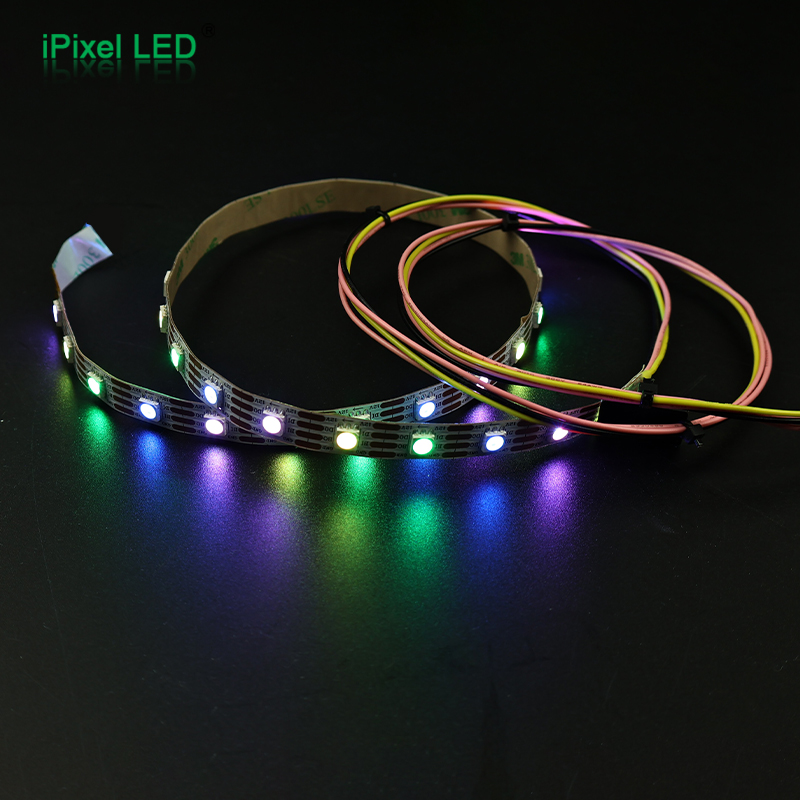 Addressable RGB operation, view1
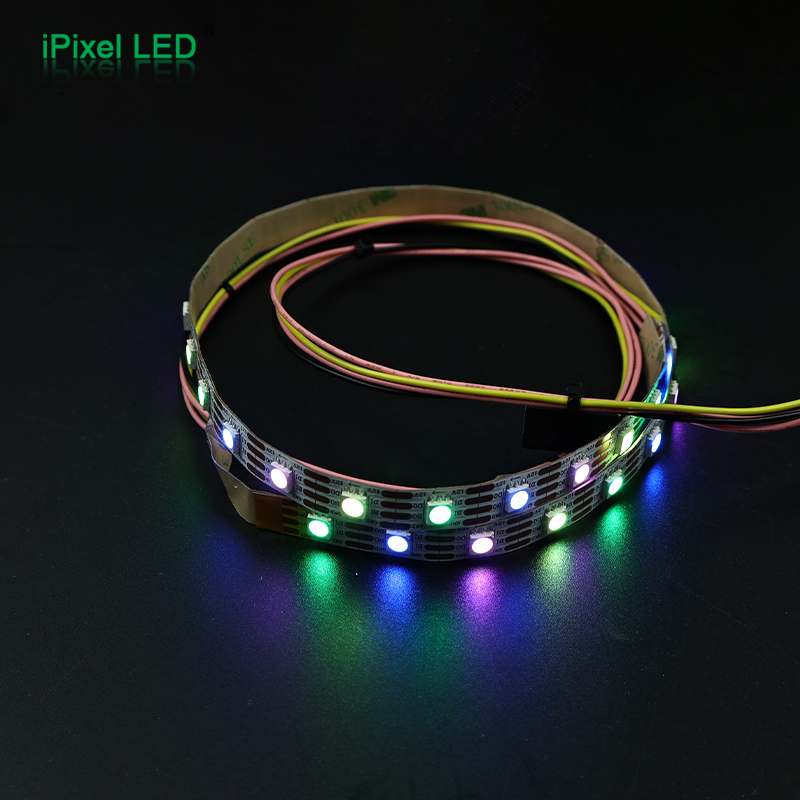 Addressable RGB operation, view 2.
The supplied illuminated photographs demonstrate addressable RGB operation on the photographed assembly. A separate EVERFINE HAAS-2000 report documents electrical and optical measurements of a related 1 m LED-strip sample in individual red, green and blue modes and a mixed-color mode.
Scope note: The optical report identifies a 1 m strip sample, while the engineering drawing specifies a shorter LED section as part of a harness assembly. The report must not be presented as an assembly-level acceptance report for the exact pictured configuration.
OEM approval may also require checks of polarity, connector mapping, wiring continuity, insulation, physical dimensions and workmanship, according to the final customer-approved specification. No project-specific production inspection record has been supplied for publication.
5. Preparing an OEM Specification for Repeated Orders
Equipment manufacturers need a configuration that can be referenced consistently when parts are ordered again. For assemblies with defined wiring, connector and identification requirements, the engineering handover should identify the approved drawings, component specifications, cable details, assembly notes and any agreed inspection criteria.
This example illustrates the level of definition involved in a non-standard LED assembly. It does not by itself demonstrate documented batch-to-batch quality results or verified repeat-order performance for this specific part. Those claims require actual production and inspection records.
For a broader view of iPixel's manufacturing and quality management approach, see our Manufacturing Capability and Quality Control pages.
6. Where Similar Engineering Requirements Appear
Similar integration questions arise in many equipment sectors: vending machines and kiosks may need defined wiring and replacement interfaces; refrigeration cabinets may impose installation and environmental constraints; display fixtures and furniture may need variant-specific lengths and connectors; and industrial equipment may require integrated indicator or decorative lighting.
Application-specific electrical, environmental and compliance requirements must still be assessed for each project. The transferable capability is the process of translating an OEM's detailed component requirements into an assembly configuration that can be reviewed, sampled and specified.
Custom Engineering Across LED Product Families
We apply this engineering-led approach to flexible SMD and COB LED strips, rigid LED bars, custom PCB light sources and neon-flex solutions. Project requirements may involve unusual PCB outlines, electrical and optical targets, installation restrictions, wiring harnesses, connection formats or protective constructions.
If an equipment manufacturer already has a mechanical drawing, a current lighting sample or a defined installation space, those materials can form the starting point for an engineering review.
Discuss Your OEM LED Component Requirements
Share your drawing or existing sample, available space, voltage, optical targets, operating environment, wiring and connector requirements, expected quantities and target schedule. iPixel's team can review the requirements and discuss the next engineering and sampling steps.
Contact: inquiry@ipixelleds.com