
iPixel manufactures flexible LED strips, rigid LED bars, neon flex and custom light boards for OEM projects. Our manufacturing approach connects production and material planning with SMT, assembly, aging and shipment preparation.
Our core manufacturing strengths include solder paste printing, component placement, reflow soldering and automated optical inspection (AOI). Silicone extrusion is performed in-house. Production and Material Control (PMC) coordinates both the SMT workshop and the production lines, helping align material availability with the order schedule.
All products undergo aging for at least 8 hours. Typical mass-production lead time is 15–20 days after order confirmation, with the project schedule affected by tooling and custom components where applicable.
PMC Coordinates Materials and the Production Schedule
An OEM order needs materials and production time to come together. Our PMC team plans the work for the SMT workshop and the production lines. Material issuing staff supplies the materials, and the production department follows PMC instructions for the finished assembly.
ERP inventory provides a reference for the material review. When several orders require the same component, the material planner considers the latest order demand when arranging purchasing. The purchasing plan therefore needs to reflect the combined requirement rather than only the needs of one order.
From Material Issue to Finished LED Assembly
| Production stage | How the work is organized |
|---|---|
| Material planning and issue | PMC reviews order requirements and ERP inventory. The material issuing staff supplies the materials required for production. |
| SMT production | Boards move through solder paste printing, placement and reflow soldering, with AOI included in the board inspection process. |
| Post-SMT checks and transfer | The assembled boards are tested before being transferred to the production department. |
| Finished-product assembly | The production department completes the required assembly according to PMC instructions and the product configuration. |
| Aging and release checks | Products undergo at least 8 hours of aging. Identified defects are addressed before the product is released for shipment. |
This is the main route for a flexible LED strip order. Additional processing depends on the product construction. The manufacturing plan identifies which operations are needed before the item moves to finished-product assembly and aging.
Solder Paste Printing SMT Reflow and AOI
Solder paste printing, SMT placement, reflow soldering and AOI are core parts of our LED board production capability. Equipment includes automatic printing machinery, Hanwha S1 placement equipment and 10-zone reflow soldering equipment.
AOI supports visual inspection of assembled boards within the production route. Post-SMT testing is carried out before the boards transfer to the production department. Keeping these stages connected helps identify board-level issues before final assembly.
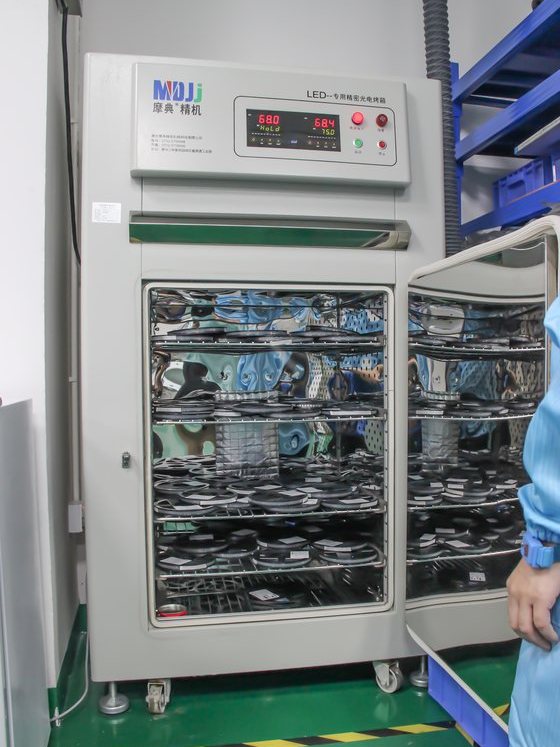 LED component baking equipment.
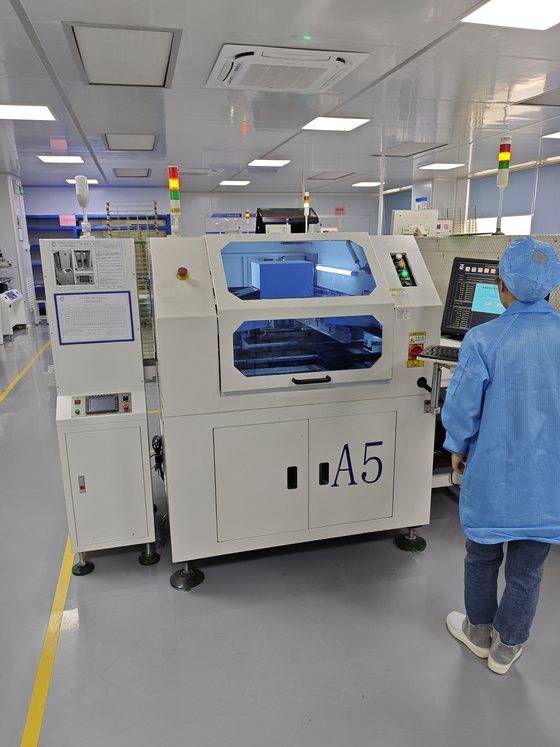 Automatic solder paste printing.
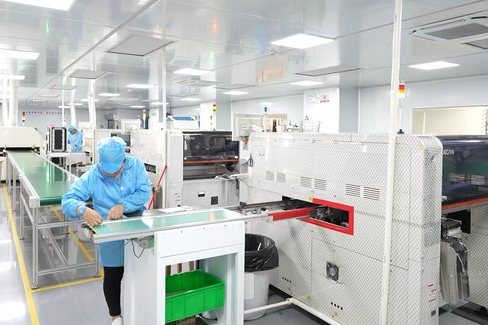 SMT production area.
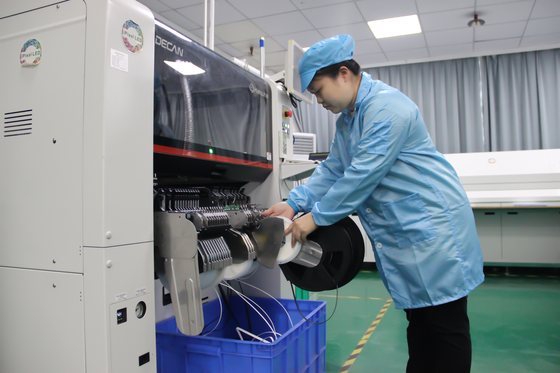 Hanwha S1 component placement equipment.
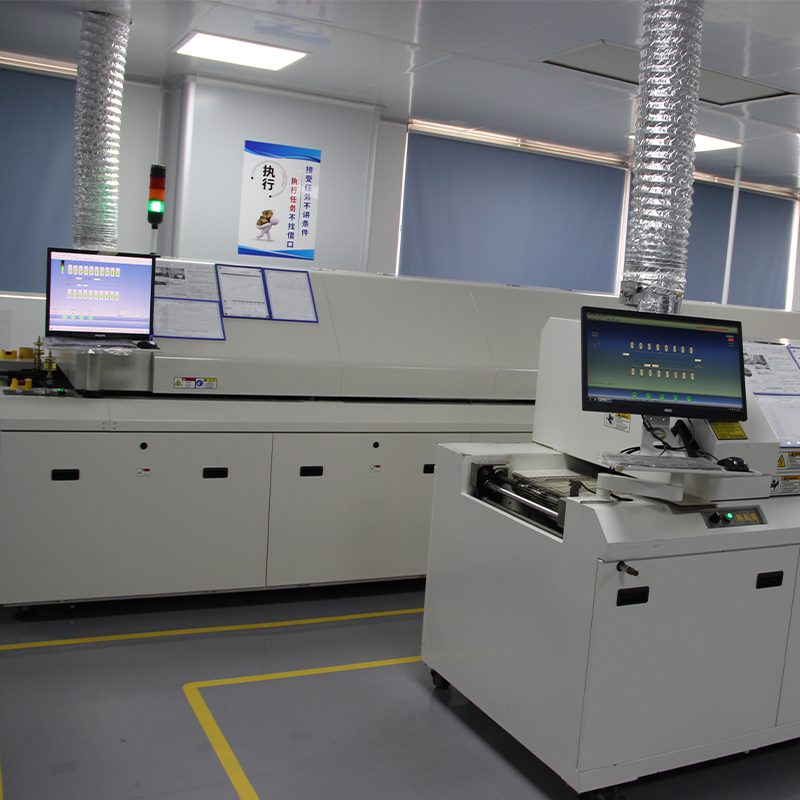 10-zone reflow soldering.
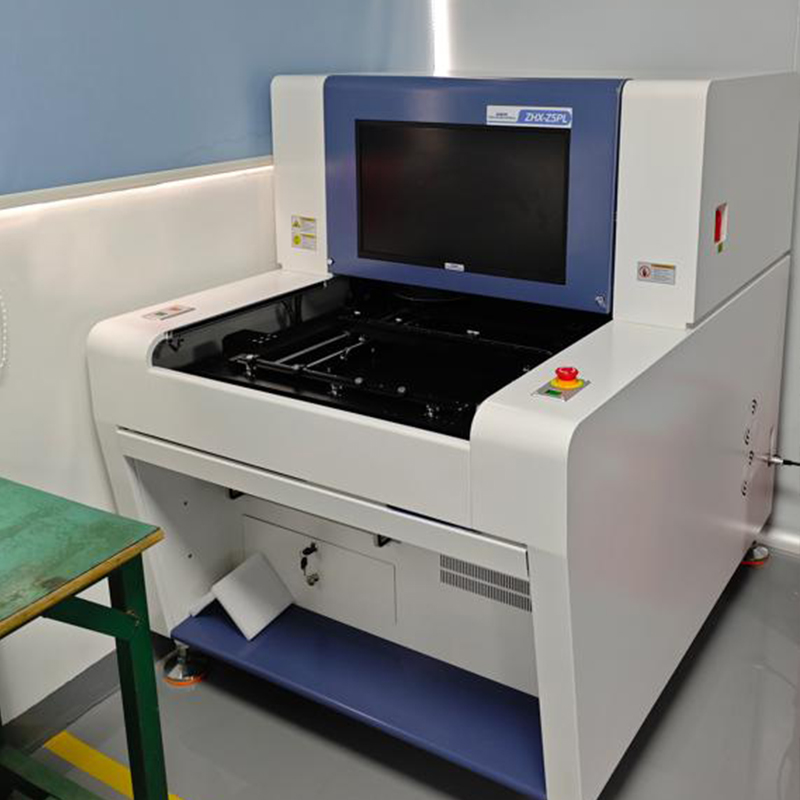 AOI equipment for assembled-board inspection.
In House Silicone Extrusion and Component Processing
Silicone extrusion is performed in our factory. The equipment shown below also includes end-cap molding and aluminum profile cutting machinery, supporting the processing operations needed for applicable LED components.
We distinguish the operations carried out in-house from externally sourced inputs. Our R&D engineers can prepare the drawings for a custom aluminum profile, while an external extrusion supplier produces the profile. Purchased tooling and PCB materials are also part of the supply chain.
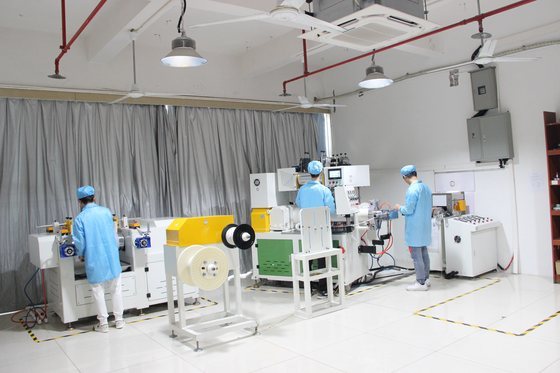 In-house silicone extrusion.
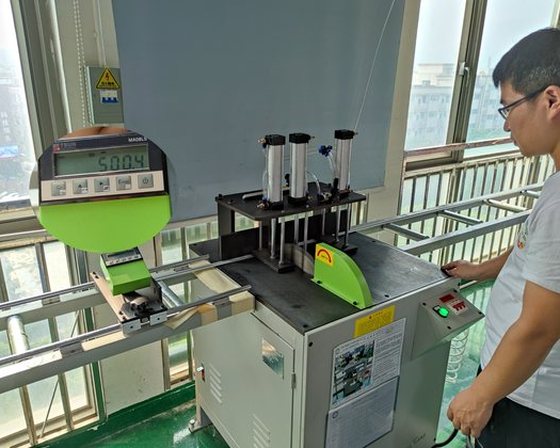 Aluminum profile cutting for component preparation.
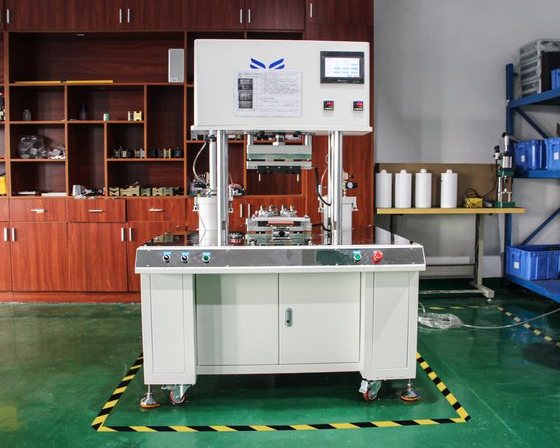 End-cap molding equipment.
| Manufacturing activity or input | How it is handled |
|---|---|
| SMT placement and soldering | Performed in-house as core production processes. |
| Silicone extrusion | Performed in-house for applicable products. |
| Component preparation and final assembly | Carried out through the relevant production operations. |
| Tooling and molds | Purchased from external suppliers. |
| PCB materials | Purchased externally for use in LED production. |
| Aluminum profiles | Purchased externally; custom extrusion is outsourced to specialist suppliers using drawings prepared by iPixel R&D engineers. |
| Aluminum profile cutting | Cutting equipment is used for relevant component preparation; aluminum extrusion itself is outsourced. |
Assembly Follows the PMC Production Instructions
After the post-SMT checks, boards transfer to the production department for the final assembly required by the order. Soldering is one of our established production strengths. The work is scheduled by PMC alongside the SMT plan.
Application-specific lengths, wiring and connector definitions are covered on our Custom Engineering page. Here, the focus is on how the defined component moves through the factory and the required processing stages.
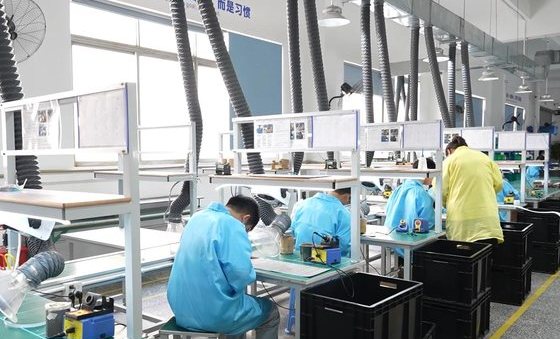 Soldering production line.
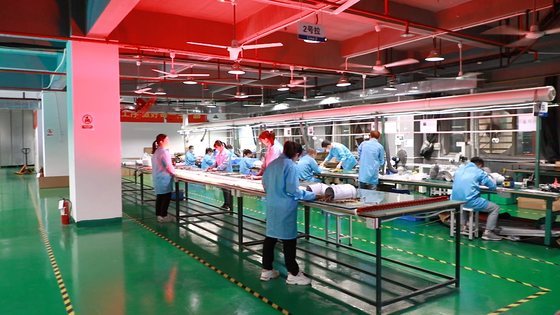 Production and assembly area.
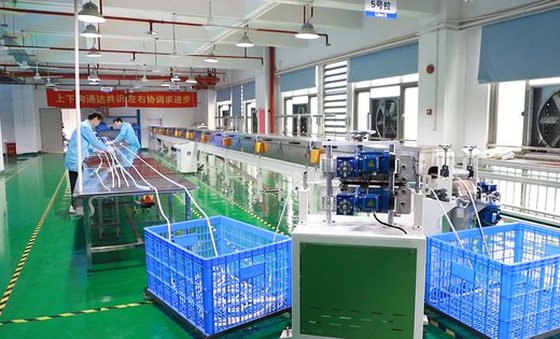 Production area and material handling.
Material Planning Example for a 10,000 Metre LED Strip Order
A 10,000-metre LED strip order illustrates the planning process described by our production team. PMC reviews the required materials against the inventory recorded in ERP. The material planner arranges purchasing for the required components, taking the latest order demand into account.
When the materials are available, material issue, SMT production, post-SMT testing and final assembly follow the planned route. The production department completes the finished assembly according to PMC instructions.
A practical challenge arises when multiple orders share the same material. Updating purchasing against the latest demand helps the planner address that shared requirement. This example describes order planning; the 10,000-metre quantity is not a claim about monthly capacity or delivery performance.
100 Percent Aging for at Least 8 Hours
All products undergo aging for at least 8 hours as part of the production process. Aging provides a further opportunity to identify abnormal operation after assembly. Items with identified faults are repaired and checked against the relevant requirements before shipment release.
The purpose is to supply products that meet the agreed acceptance requirements. Aging coverage should be distinguished from production yield or a guarantee of future field performance. See Quality Control for the broader inspection approach and Testing & Validation for project-specific evaluation.
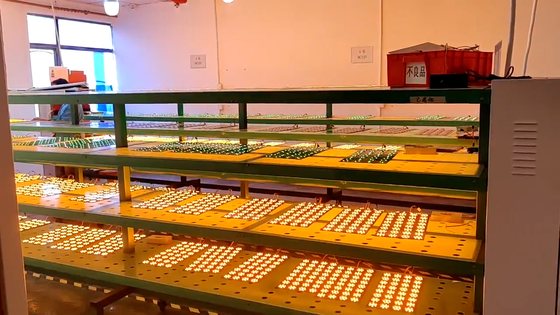 Powered aging of LED products.
Typical Production Lead Time Is 15 to 20 Days after Order Confirmation
The normal mass-production lead time is approximately 15–20 days after the order is confirmed. Tooling requirements or the availability of custom terminal and connector components can affect the schedule.
Confirm the intended delivery date and any special material requirements with the team when placing the order. This production schedule is separate from the sampling schedule described on our R&D & OEM/ODM Support page.
Questions from OEM Buyers
Who schedules SMT and final assembly?
PMC schedules both the SMT workshop and the production lines. Material issue, board production and finished-product assembly are coordinated against the order requirements and material availability.
Do you manufacture silicone and aluminum profiles in-house?
Silicone extrusion is performed in-house. Aluminum profiles are purchased externally; for a custom profile, iPixel R&D engineers prepare the drawing and an external supplier performs the extrusion. Tooling and PCB materials are also purchased externally.
Does every product undergo aging?
Yes. iPixel applies aging to 100% of products for at least 8 hours. Aging is part of the production and release process. It is not a lifetime test or a guarantee that no product can develop a later fault.
What is the normal production lead time?
The typical mass-production lead time is 15–20 days after order confirmation. Tooling and custom components, including special terminal or connector assemblies, can affect the project schedule. Confirm the required delivery date with the team for the specific order.
Discuss Your LED Production Requirements
Share the confirmed product configuration, expected quantity, required delivery date and any tooling or custom-component requirements. Our team can review the order and discuss the material and production arrangements.