
Every LED strip, rigid light bar and custom light board we ship passes six documented control stages, run under our AIAG-format control plan and ISO 9001 quality management system. The process is designed to reduce production variation from material control through manufacturing, testing and packing — not just to catch defects at the end.
1. Incoming Material Inspection (IQC)
LED chips, PCBs and electronic components are sampled per GB/T 2828, general inspection level II. Model, specifications, appearance, dimensions and electrical performance are verified and recorded before any material is released to production. A single incoming LED batch can exceed 200,000 pcs — every batch is tested and documented before it enters the line.
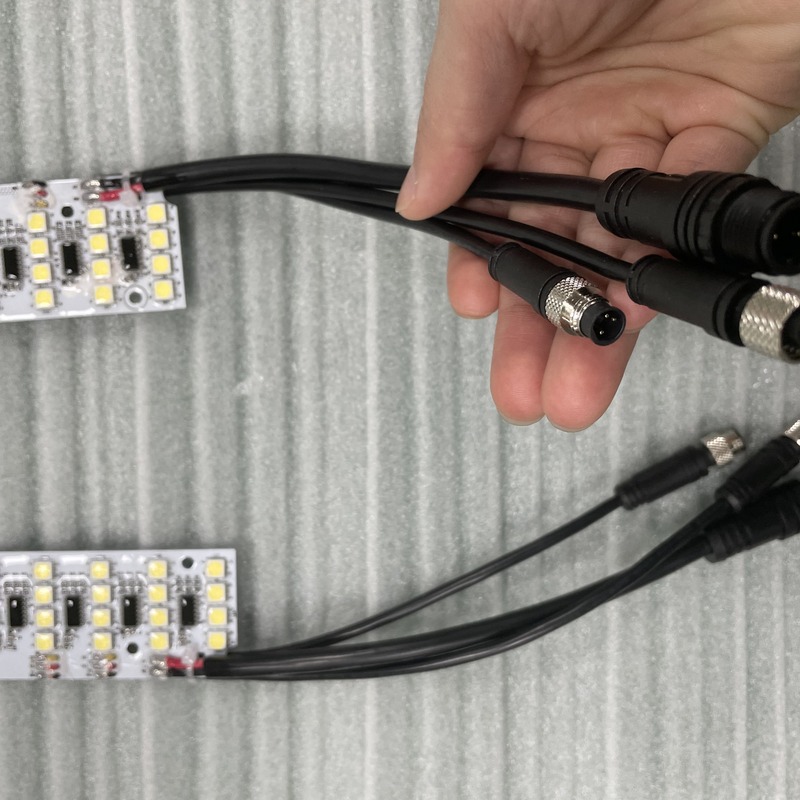
2. SMT Process Control
Solder paste brand, stencil and placement program are verified before every run. Each shift starts with a first-article check of 10 pcs, followed by hourly patrol inspection. The reflow profile is confirmed at every changeover, and post-reflow inspection screens for missing, shifted or bridged components. Board dimensions are re-checked after depaneling.
3. Wiring, Gluing and Assembly
Wire soldering and gluing operations run under first-article and patrol checks covering solder joints, wire positioning, glue mixing ratio and curing time. Nonconforming units are segregated and reworked under documented reaction plans.
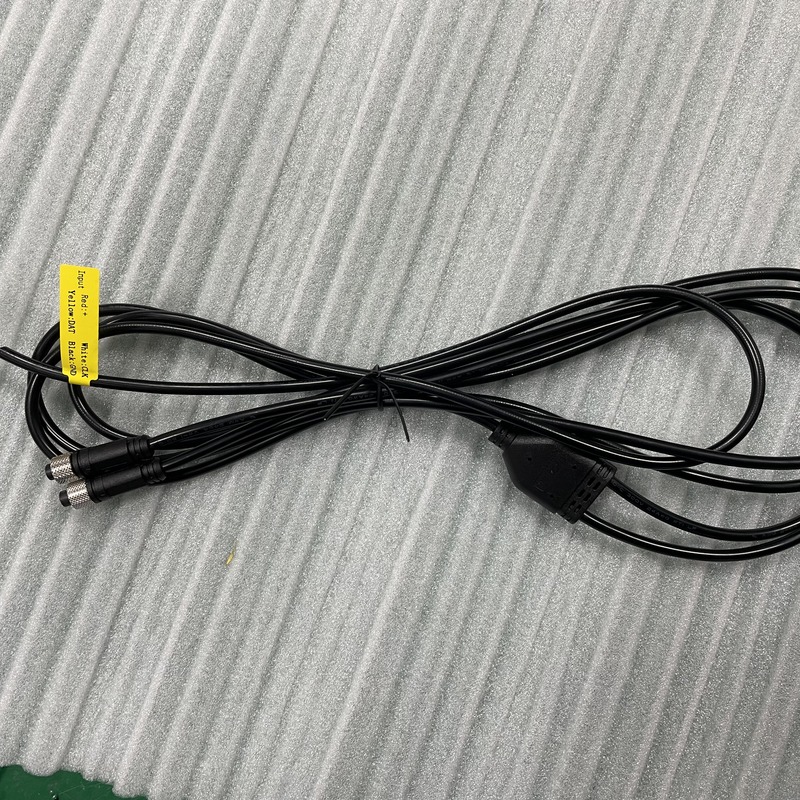
4. Function Test and Flame-Retardant Verification
Assemblies are powered on and function-tested against the finished-product inspection standard. Materials and finished products are additionally verified with needle-flame testing to confirm the flame-retardant performance of coatings and insulating components.
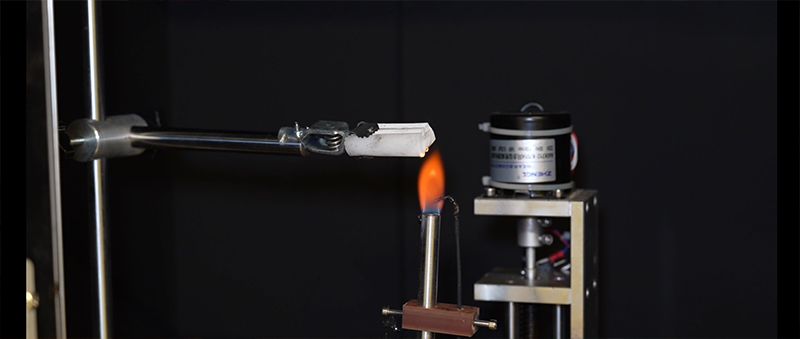
5. 8-Hour Aging Before Packing
Before packing, products are powered on and aged for at least 8 hours. Performance is verified after aging — so early-life failures are caught in our factory, not in your cabinet or on your production line.
6. Outgoing Quality Control (OQC) and Shipment
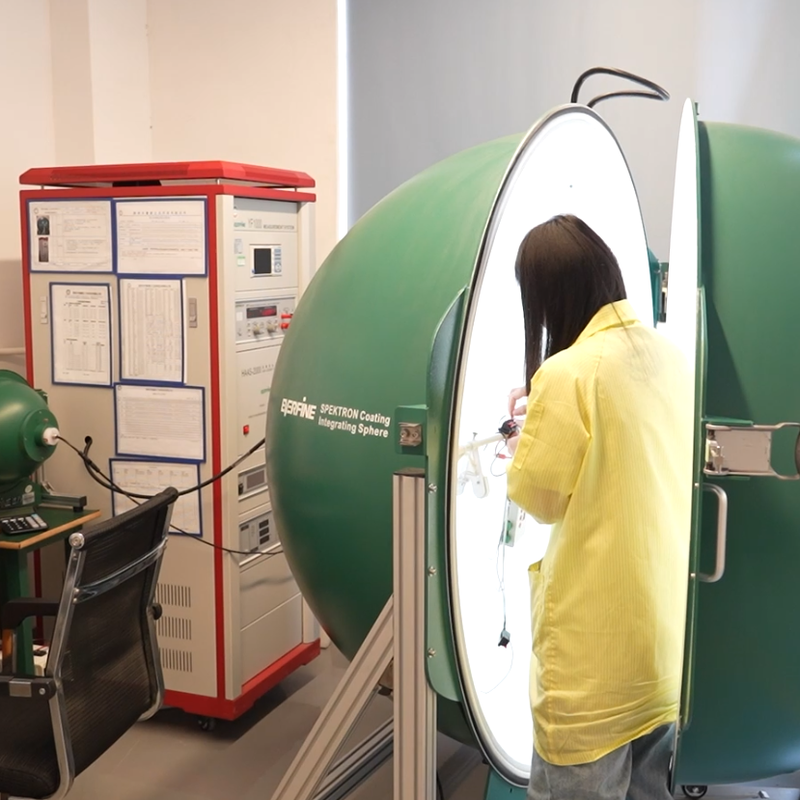
Per-batch OQC samples are measured on an integrating sphere for power, luminous flux, CCT and CRI, together with appearance and dimension checks. Acceptance follows GB/T 2828 sampling; any failure opens a documented nonconformance report. Carton condition, labels and quantities are confirmed per batch, with an outgoing inspection report for every shipment.
Sampling and Judgment Standards
| Stage | What is checked | Sampling and basis |
|---|---|---|
| IQC | Model, specifications, appearance, dimensions, electrical performance | Per batch — GB/T 2828, general inspection level II |
| SMT | Stencil and program match, first article, reflow profile, post-reflow defects | First article 10 pcs; hourly patrol; profile per changeover |
| Assembly | Solder joints, wire positioning, glue ratio and curing | First article plus patrol inspection |
| Function and aging | Electrical function, coating flame retardance, post-aging performance | 100% function test; aging ≥ 8 hours |
| OQC | Power, luminous flux, CCT, CRI (integrating sphere), appearance, dimensions | Per batch — GB/T 2828 sampling |
| Packing and shipment | Carton condition, labels, quantities | Per batch, with outgoing inspection report |
Batch Traceability from Finished Product to LED Reel
A three-level coding system links every finished product to its semi-finished assembly and PCBA level — down to the PCB batch and the LED reel it came from. If an issue ever surfaces in the field, it can be traced back to its material source instead of triggering a blind recall.
Planning a new LED strip or rigid bar project?
Contact our team to discuss your application. You can also see the instruments behind these controls on our
Testing & Validation page and the certificates we hold on the