iPixel supports custom LED development from customer drawing review and design refinement to sampling and the introduction of batch production. Our R&D, engineering, sales and quality teams work together to turn the application requirements into a component that can be reviewed, sampled and defined for production.
Our development scope includes flexible LED strips, rigid LED bars, neon flex and custom light boards. Projects may involve a special profile, installation envelope, optical appearance, LED arrangement, wiring or connector configuration. The right starting point is the customer’s drawing, existing sample or installation requirement.
The wardrobe lighting example below shows this process in practice: refining a custom neon-flex profile, addressing visible dark areas and increasing LED density before moving on to customer feedback and related orders.
Start with the Application and the Customer Drawing
A custom LED component has to fit the equipment as well as provide the required light. We begin by reviewing the available drawing and discussing the application. Depending on the project, the review can cover profile dimensions, mounting, voltage, PCB or FPC layout, LED selection, brightness, colour consistency, wiring, protection and market requirements.
When a requirement is unclear or the design raises a practical question, we bring it back to the customer for confirmation. This helps establish what the sample needs to demonstrate before development proceeds.
A Defined Route from Review to Initial Production
| Stage | What we work through | What the buyer helps confirm |
|---|---|---|
| Requirement review | Assess the drawing, application, structure and relevant electrical or optical requirements. | Installation space, critical dimensions, lighting effect and intended use. |
| Design discussion | Raise questions and propose changes to the component design. | The proposed drawing and any changes to the original requirement. |
| Sampling agreement | Confirm the sample scope and sample contract before making the sample. | The configuration and requirements to be evaluated. |
| Sample development | Produce the agreed sample and review the relevant appearance and functional characteristics. | Sample feedback, required adjustments and the approval basis. |
| Initial batch introduction | Engineering addresses production-related issues as the project enters initial batch manufacturing. | The configuration and order requirements for the production stage. |
Wardrobe Lighting Example Refining a Custom Neon Flex Profile
The customer initially wanted a neon-flex component made to their drawing, including custom tooling for a particular wardrobe installation. Our R&D team reviewed the profile and proposed changes to the light-emitting surface rather than simply proceeding with the original cross-section.
The proposed revision made the emitting face thicker and flat. When dark areas were identified during development, the team also changed the LED density from 120 to 140 LEDs per metre to address the visual discontinuity. This illustrates how profile design and the LED arrangement can need to be reviewed together.
The customer was satisfied with the revised sample, as reported by iPixel’s project team. The supplied order records show the 140 LEDs-per-metre configuration in multiple ordered lengths. These records support the connection between the developed configuration and related orders.
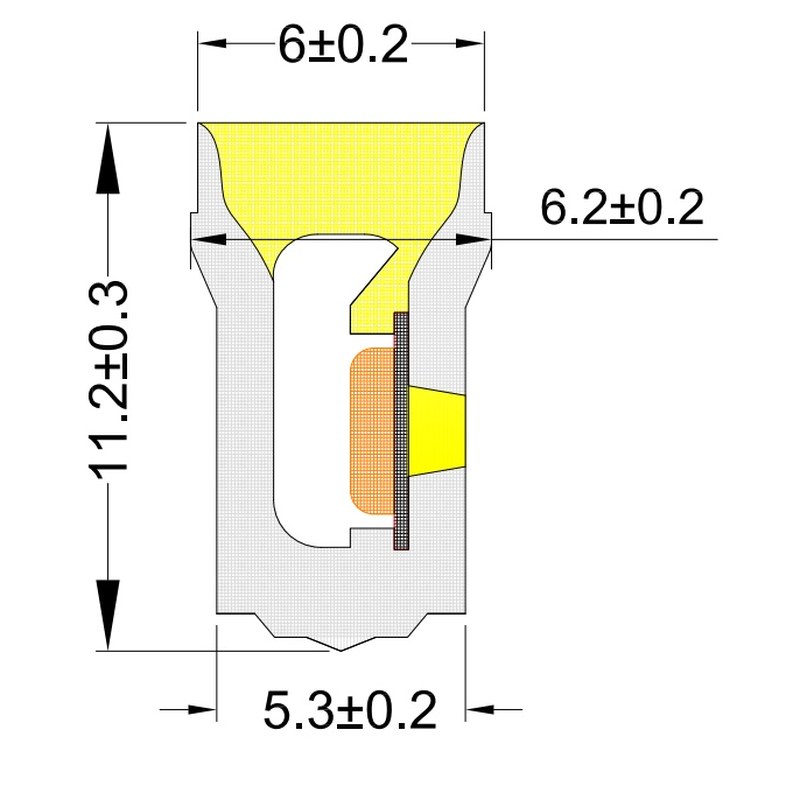 Revised profile illustration showing the emitting face and internal construction.
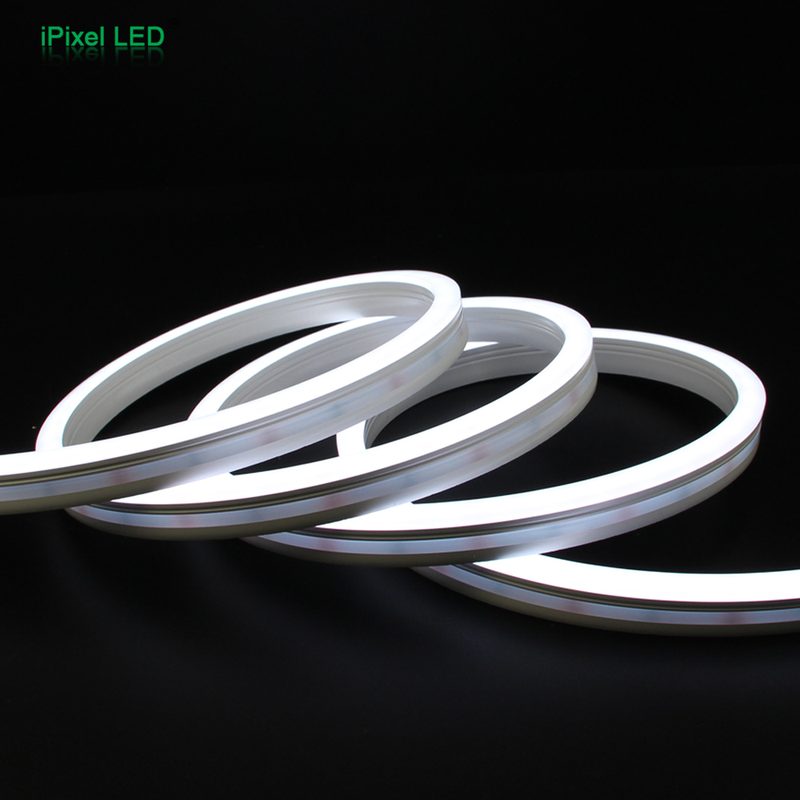 Illuminated neon-flex sample supplied for the wardrobe lighting project.
| Development step | What changed or was reviewed | Why it mattered |
|---|---|---|
| Customer drawing | A custom neon-flex profile was requested for a wardrobe installation with a particular structure. | The component had to work within the customer’s installation concept. |
| Profile revision | R&D proposed a thicker, flat light-emitting face. | Refine the emitting surface and the component’s optical construction. |
| Optical refinement | After dark areas were identified, LED density was changed from 120 to 140 LEDs per metre. | Address the visible lighting discontinuity during development. |
| Sample feedback | iPixel reports that the customer was satisfied with the revised sample. | Use customer feedback to evaluate the proposed solution. |
| Related orders | The supplied ERP records include orders for the 140 LEDs-per-metre configuration in multiple lengths. | Provide a documented order reference for the developed configuration. |
The sample photograph illustrates the developed lighting component. Decisions about uniformity, dimensions or bending performance should use the agreed sample requirements and evaluation method. A photograph alone does not provide a numerical uniformity result or establish a bending-life rating.
Review Structure and Lighting Appearance Together
In a narrow installation, the profile, emitting surface and LED spacing all contribute to the appearance of the light. Increasing the LED count alone is not a universal solution; the appropriate arrangement depends on the component and the effect required in the finished installation.
For a wardrobe, cabinet or retail display project, identify which surfaces will be visible, how the component will be mounted and what lighting effect the customer expects. Those details help define what to examine in the sample and which changes need customer confirmation.
R&D Engineering Sales and Quality Have Distinct Roles
| Team | Role in the project | Buyer-facing value |
|---|---|---|
| R&D | Design and refine drawings; confirm the sample design. | A technical team can review the proposed component and respond to design questions. |
| Engineering | Address manufacturing issues during initial batch production. | The transition from sample to batch production has a defined technical contact. |
| Sales | Communicate with the customer and, where involved, the end customer; coordinate confirmations and orders. | Commercial and technical feedback can be brought back to the project team. |
| Quality | Check relevant characteristics such as shadows, flexibility and LED operation during bending checks. | Sample evaluation considers the finished component’s appearance and function. |
This division of responsibilities supports continuity as a project moves from design discussions to the sample and initial production. Sales coordinates customer feedback, while the technical and quality teams address the requirements relevant to their stage of the project.
Sample Review Covers Appearance Flexibility and Function
For custom neon flex, the quality review can include visible shadows, the flexibility of the component and whether bending affects LED operation. The appropriate evaluation depends on the profile and the intended installation. A bend suitable for one construction should not be assumed suitable for another.
Before evaluating a sample, define the relevant conditions: how it is mounted, the direction and extent of bending, the selected power supply and the appearance or functional criteria being checked. If a dedicated reliability test is needed, discuss its method and acceptance limits separately. See our Testing & Validation page.
Sampling Starts after the Sample Contract Is Confirmed
After receiving the drawing, we assess the project and discuss the requirements with the customer. Sample making starts after the sample contract is confirmed. The typical sampling period is 15–20 days from that confirmation.
The actual sample schedule is confirmed for the project. This estimate applies to sampling and should be kept separate from the delivery schedule for batch production. If the design or sample scope changes, confirm the corresponding schedule with our team.
Carry the Confirmed Component Definition into Production
When a project moves into production, the drawing, component configuration, wiring and agreed requirements need to remain clear. Our R&D team communicates the product requirements and updates to sales, and sales enters the corresponding ERP order for production. Engineering focuses on production-related issues during the initial batch.
For repeat orders, identify the product reference and communicate any changes before ordering. See Quality Control for the related BOM and inspection approach, and Manufacturing Capability for production support.
Questions from OEM Buyers
Can we start with our own drawing or an existing sample?
Yes. Send the current drawing or sample, installation details and performance requirements. We review the information, raise questions and discuss the proposed design before sampling.
Can your R&D team suggest changes to our original design?
Yes. In the wardrobe neon-flex example, R&D proposed changes to the emitting face, followed by a change in LED density when dark areas were identified. The proposed changes are discussed with the customer rather than treated as automatic substitutions.
How long does sampling usually take?
The typical sampling period is 15–20 days after the sample contract is confirmed, following requirement review and customer confirmation. The actual schedule is confirmed for the project; this is a sampling estimate, not a guaranteed mass-production delivery period.
What does the quality team check on a custom neon-flex sample?
The relevant checks can include visible shadows, flexibility and whether LEDs continue to operate during the agreed bending evaluation. Other requirements depend on the application. The bending direction, radius, repetitions and acceptance conditions should be defined for the specific construction.
How do you support the move from a sample to production?
R&D confirms the sample design, engineering addresses initial batch production issues, sales coordinates customer communication and orders, and quality checks the relevant requirements. Product definitions and order requirements should be confirmed for the production stage.
Discuss Your Custom LED Development Requirements
Share your current drawing or sample, installation space, lighting target, voltage, wiring requirements, expected quantity and target schedule. Tell us which characteristics are essential to your product so we can review the design and discuss the next sampling steps.
Discuss Your OEM LED Project | inquiry@ipixelleds.com
Related capability: Custom Engineering.