
For refrigeration OEM engineers and quality teams, an IP rating and a cabinet-specific condensation check answer different questions. Confirm the enclosure protection, then evaluate what happens during cooling, shutdown and rewarming in the intended installation.
Technical basis: iPixel engineering input and an internal test record dated 24 September 2022, with the observations clarified during preparation of this note.
What an IP65 label tells you
IEC 60529 classifies enclosure protection. In IP65, the two numerals describe dust-tight protection and protection against water jets. This designation is relevant when selecting a light bar, but it should not be treated as evidence that every temperature transition in a refrigerated cabinet has been evaluated.
A water-exposure check evaluates the specified enclosure assembly under its recorded conditions. A cabinet application check can instead reveal fogging during operation or after shutdown. One result should not be substituted for the other. Check the exact model, end treatment, cable entry and connector arrangement covered by the supporting records.
Two checks with different purposes
| Check | Main question | What to keep separate |
|---|---|---|
| Enclosure water testing | How did the specified assembly perform under the documented water exposure? | The tested assembly, procedure and result; a water check alone does not establish the dust-protection part of the complete rating. |
| Installed cabinet evaluation | Does the lighting meet the project's appearance and operating requirements during the intended thermal sequence? | Cabinet air temperature, local conditions, power state, observation timing and internal versus external moisture. |
Why fogging needs a separate application check
Condensation can form when a surface reaches the surrounding air's dew point. A cold enclosure, the air within it and the room do not necessarily warm at the same rate. This provides a reason to examine thermal transitions, rather than checking only a fully illuminated lamp at a steady cabinet temperature.
First distinguish moisture on the outer cover, fog on the inner cover and mist in the cabinet air. They are different observations. Internal fog confirms moisture is present in the enclosed space, but does not by itself identify how it arrived there. A photograph near a cable entry is not proof that the cable entry was the ingress path.
For the installation discussed below, internal fogging after shutdown was an unacceptable appearance result. That was a project acceptance decision, not a replacement definition of IP65.
The open-cabinet observation
The application evaluation concerned an open refrigerated display cabinet with air at approximately 5°C. The lights were operated for 24 hours. The room was at 20–22°C and 50–60% relative humidity. Cabinet air temperature was recorded; lamp-surface temperature and internal humidity were not supplied.
The cabinet refrigeration and the lighting were then switched off together. The cabinet gradually warmed toward room temperature, without switching the lights back on to clear the fog.
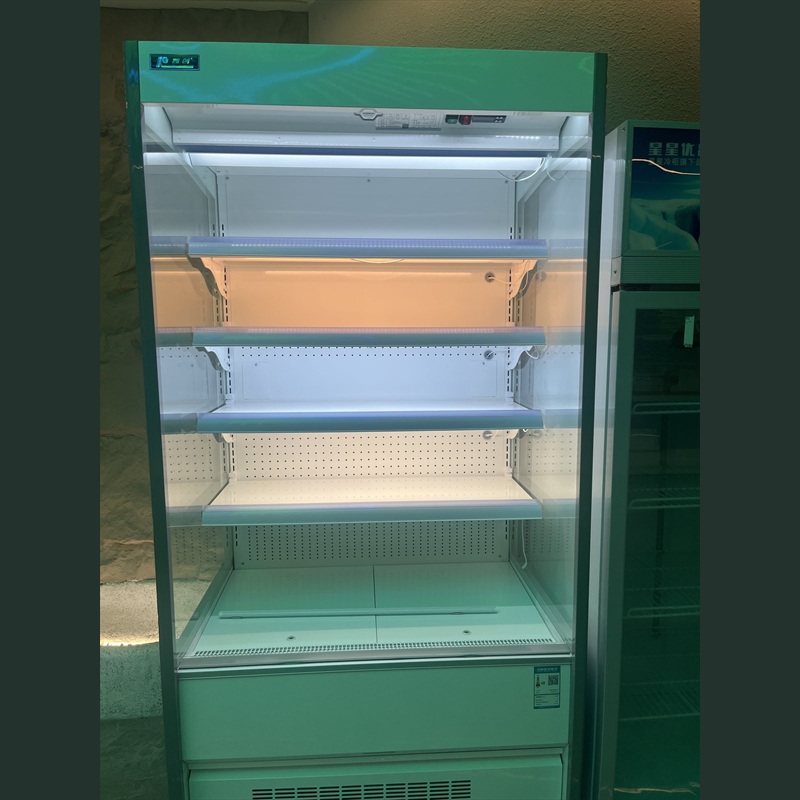
Cabinet test setup supplied with the engineering notes. The recorded temperature is cabinet air temperature, not a measured lamp-surface temperature.
Reported conditions and observations before the sealing revision
| Cabinet condition | Open refrigerated cabinet; approximately 5°C air temperature |
|---|---|
| Initial operation | 24 hours with the lights on |
| Room conditions | 20–22°C; 50–60% RH |
| Shutdown | Refrigeration and lighting switched off together; gradual rewarming |
| Fog location | Inside the light cover, with observations near cut ends and cable-exit areas |
| Appearance after shutdown | Pronounced internal fog reported within approximately 3–10 minutes |
| Subsequent observation | Fog gradually cleared over a reported 30–90-minute period |
Clearing later did not make the initial appearance acceptable to this project. The team needed to evaluate the shutdown period as well as the earlier powered operation.
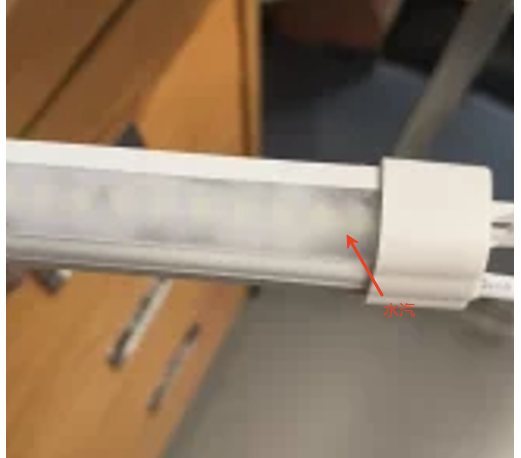
Moisture image associated with the pre-rework condition. The red annotation identifies the visible moisture area; the internal location was confirmed in the engineering follow-up.
What changed, and what was repeated
The engineering response was to improve the fit between the light cover and the aluminium housing and apply waterproof silicone sealant. These were changes to the evaluated assembly. They do not establish that one particular joint was the sole cause of the earlier moisture condition, nor that adding sealant is a universal solution for every enclosure.
After the revision, the team repeated both the water-exposure test and the cold-operation/shutdown/rewarming sequence. The reported outcome was a pass, with no internal fog observed during the repeated rewarming check.
The internal water-test information identifies one light-bar assembly with its terminal lead, an IP65 designation and a 300-minute exposure with the sample unpowered. This is the duration confirmed for the supplied internal record, not a statement that IEC 60529 prescribes a 300-minute test. The record is not presented here as third-party certification.
The post-revision result covers the repeated sequence described here. Longer operation, other airflow patterns and different shutdown conditions require their own evaluation.
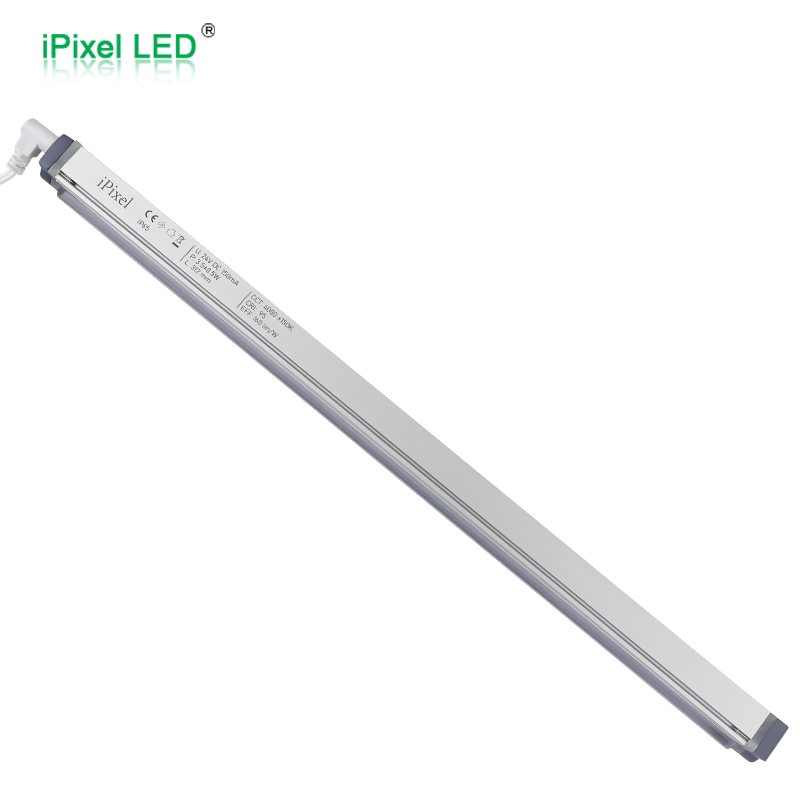
Product reference for the enclosure and end connection. It is not a post-rework test photograph.
What to confirm before releasing a cabinet lighting configuration
- Define the assembly. Identify the light bar, end caps, cover-to-housing interface, terminal lead and connectors. Confirm which configuration the water-test record covers.
- Document the thermal sequence. Specify the cabinet air condition, powered dwell and shutdown states. Record room temperature and RH; do not substitute cabinet air temperature for measured surface temperature.
- Identify the moisture location. Photograph the outside and inside where practicable, record the time of appearance and clearing, and distinguish light-cover fog from cabinet-air mist.
- Define acceptance before testing. State whether internal fog is acceptable, what inspection window applies and which functional checks are required. Use the project's agreed limits rather than treating a clear-looking cover as a complete electrical or ingress assessment.
- Repeat the relevant checks after a change. Cover fit, sealant application, end treatment or cable-entry changes need evaluation in the revised assembly. Retain the configuration and result together so later batches can be compared.
In this application, the engineering guidance was to avoid positioning the light directly in the cold-air discharge. Long-term operation under direct discharge had not been validated. Review the actual cabinet airflow and the lamp position rather than applying a universal clearance from this example.
Information to send when reporting fogging
Start with photographs, the installation position and a timeline of what happened. Also distinguish which equipment was switched off, whether refrigeration continued, whether the cabinet was opened or the lamp removed, and where temperature and humidity were measured. These details are more useful for diagnosis than the description “the IP65 light fogged up” alone.
For an engineering review, include any available water-test record and the assembly revision. Do not infer a confirmed leak path or long-term reliability result from a single image or from the fact that the fog later disappeared.
Frequently Asked Questions
Does IP65 mean a refrigeration light cannot fog internally?
The designation describes enclosure protection classes. It should not be used on its own as evidence of fog-free performance through a particular cabinet's thermal sequence.
Why record whether both the cabinet and lights were switched off?
Those states define the tested sequence. In the reported check, both were switched off and the cabinet warmed gradually; a different power or refrigeration state would be a different condition to evaluate.
Did the fog disappear before the design was changed?
Yes. The pre-revision fog was reported to clear over 30–90 minutes. After the revision, no internal fog was observed during the repeated rewarming check. Those are separate observations.
What should be repeated after a sealing change?
Evaluate the revised assembly against both the applicable enclosure-protection requirements and the cabinet's operating sequence. In this case, the team repeated water exposure and the 5°C operation, shutdown and gradual rewarming check.
Related engineering and installation information
- Project: Under-shelf LED lighting for vertical open display cases.
- Solution: Refrigeration Lighting — Low-temp, Condensation & Cleaning Reliability.
- Capability: Testing & Validation.
- Products: LED Light Bars.
Review Your Refrigerated Lighting Application
Send the mounting layout, operating and shutdown sequence, photographs and available test records to inquiry@ipixelleds.com. iPixel can review the lighting assembly against the conditions of the intended cabinet application.