How to Choose LED Light Bars for Refrigerated Display Cases
Choosing LED light bars for a refrigerated display case starts with the cabinet, the merchandise and the electrical layout. Compare the assembled bar’s light output and distribution, color quality, environmental suitability and connection requirements. Then validate a sample in the intended cabinet before approving production.
This guide is for refrigeration equipment manufacturers and their engineering, product and purchasing teams. It explains which specifications matter, what evidence to request and what to include in a custom LED bar inquiry.
1. Define the cabinet before choosing the light bar
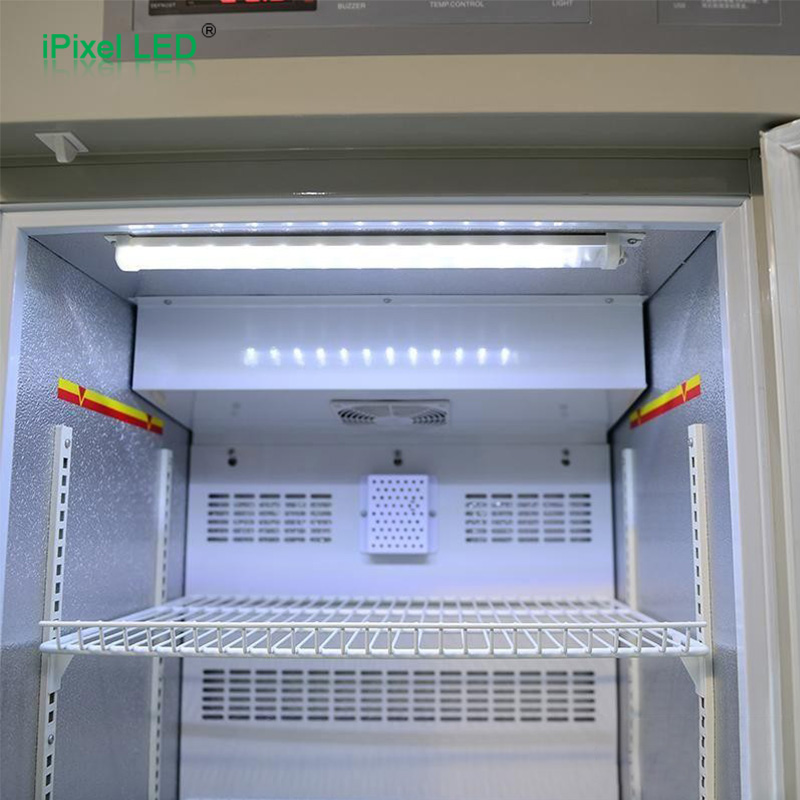
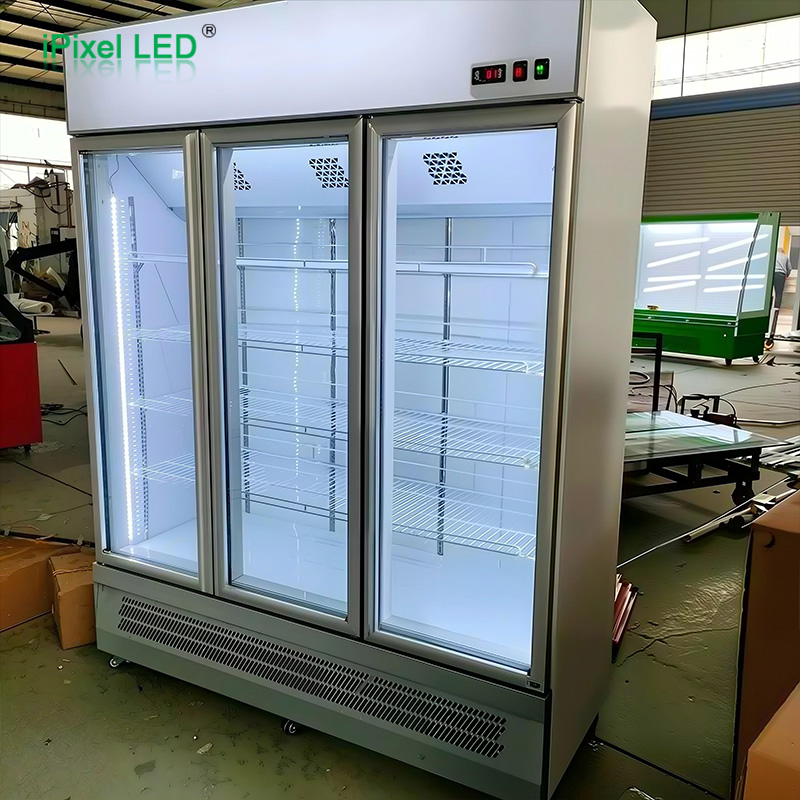
Start with the cabinet drawing. A vertical bar beside a glass door and a horizontal bar under a shelf illuminate merchandise from different positions. Record the mounting space, distance to the products, shelf arrangement and cable route. Include the intended cabinet temperature, defrost conditions and cleaning method.
Agree on what the sample must achieve: readable labels, acceptable illumination across the display, suitable product appearance and manageable reflections in the glass. Record the same viewing positions and measurement locations when comparing samples.
2. Compare lumens, lux and watts correctly
Watts describe electrical power. Lumens describe luminous flux. Lux describes the light reaching a surface. For a display case, a bar’s lumen figure alone does not tell you how evenly it illuminates the merchandise. These quantities answer different questions. CIE photometric definitions
| Specification | What it describes | What the buyer should check |
|---|---|---|
| Luminous flux, lm | Total light output | Is this the assembled bar’s output, or an LED component value? |
| Illuminance, lx | Light reaching a surface; 1 lx = 1 lm/m² | Where, at what distance and under what cabinet conditions was it measured? |
| Input power, W | Electrical power consumed | Does the figure cover the bar alone or include the power supply? |
| Luminous efficacy, lm/W | Light output per unit of electrical power | Are output and power measured at the same system boundary? |
| Light distribution | Where the light is directed | Does the installed bar cover the display area without unacceptable dark zones or glare? |
Ask for data on the assembled light bar, including its diffuser or optics. LED component efficacy and complete luminaire efficacy are different measures. Power supply losses also affect total electrical consumption. U.S. Department of Energy: LED Basics
For sample evaluation, measure agreed points across the display area. Keep cabinet geometry and loading consistent, and record how ambient lighting is treated. If comparing uniformity, define the calculation, such as minimum illuminance divided by average illuminance, and agree the acceptance value before testing.
3. Specify color rendering for the merchandise
Color rendering describes how a light source affects the appearance of object colors compared with a reference. The commonly quoted general color rendering index, Ra, averages the first eight standard test-color indices, R1–R8. R9 represents a saturated red sample and is not included in that average. CIE color-rendering samples, NIST explanation of Ra
If red merchandise or packaging is important, request R9 alongside Ra. For purchasing, specify the agreed minimum values and the measurement conditions. Avoid approving a sample solely because its specification says “high CRI.”
Evaluate representative products in the cabinet. A color-rendering score supports the decision, but it does not by itself describe every aspect of visual preference. CIE discussion of color-rendering limitations
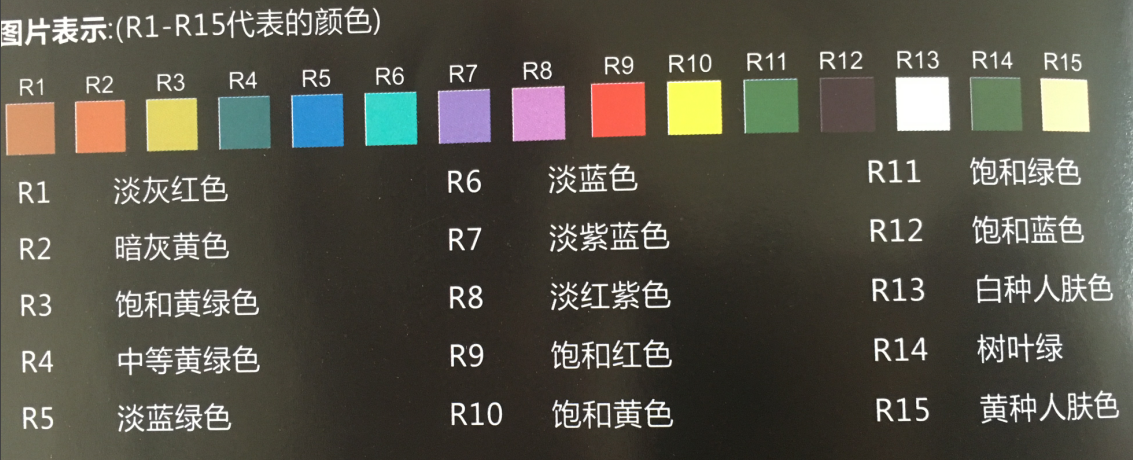
Illustrative color samples from the supplied training material. Ra uses R1–R8; R9 describes saturated red. The source also shows additional samples. Screen colors are not calibrated test references. Source: supplied LED training presentation, slide 8.
4. Agree on color temperature and consistency
Correlated color temperature, or CCT, describes the color appearance of white light in kelvin. It is separate from color rendering. Two bars with the same nominal CCT can still differ in their measured color coordinates and appearance. U.S. Department of Energy: light quality
Ask the supplier how color variation is controlled within an order and between repeat orders. If SDCM is specified, agree the target color point and tolerance rather than relying only on a nominal label such as “4000 K.” Smaller SDCM tolerances describe tighter color matching, but they should not be treated as a guarantee that all observers will see identical color. ERCO: color consistency
Approve the chosen appearance with a reference sample and documented test conditions. Do not use a photograph on an uncalibrated screen to approve production color.
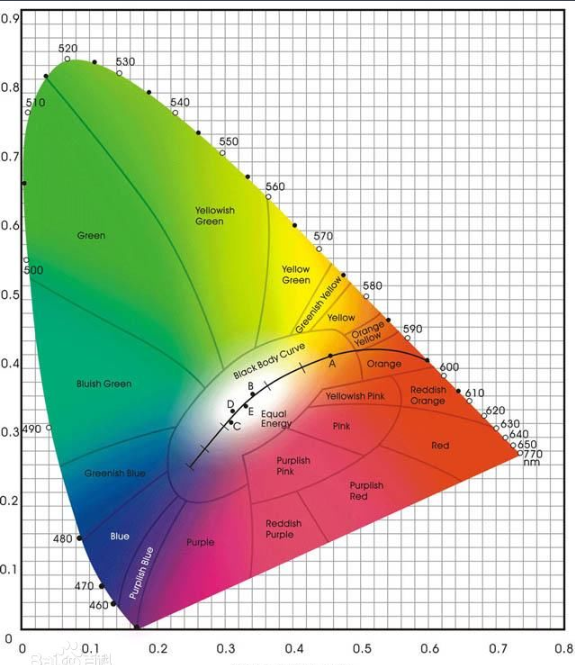
Chromaticity illustration extracted from the supplied training material. Use measured color coordinates and agreed tolerances to specify an actual LED bar. Displayed colors are illustrative. Source: supplied LED training presentation, slide 12.
5. Review moisture protection and temperature conditions separately
An IP code classifies the protection provided by an enclosure under the relevant test conditions. It is not a complete specification for refrigerator use. IEC 60529 is the reference standard for enclosure IP classifications. IEC 60529
Ask which assembled configuration the claimed rating covers, including cable entries, end caps and mating connectors. Separately describe condensation, defrost cycles, cleaning agents and the method of cleaning. Agree any additional validation these conditions require.
Request the specified operating and storage temperature ranges for the bar and the power supply. A storage or unpowered exposure test should not be presented as proof of powered operation. Sample checks should reflect the intended installation, including starting, steady operation and relevant temperature transitions.
6. Match the driver and plan the wiring
Confirm whether the light bar requires a constant-voltage supply or a constant-current driver. Match the specified electrical requirements; the forward voltage of an individual LED is not the rated supply voltage of the complete bar. MEAN WELL: LED driver selection
For a constant-voltage example, a 24 W load draws 1 A at 24 V or 2 A at 12 V, using I = P/V. This is an illustrative calculation, not an Ampix LED product specification. For the same cable resistance, higher current causes greater voltage drop because ΔV = I × R.
Define the longest cable run and connected load before confirming feed spacing. Check voltage at the first and last bars under the intended operating load. Select cable, connectors, protection and power supply capacity for the actual design. There is no universal maximum run length for all LED bars.
7. Turn the sample into a purchasing specification
Before production, document the approved dimensions, mounting arrangement, cable exit, connector pinout, electrical ratings and light-quality requirements. Specify whether changes to the LEDs, diffuser, circuit or connector require another approval.
| Include in your inquiry | Useful information |
|---|---|
| Application | Refrigerated or frozen display, cabinet type, merchandise |
| Mechanical fit | Drawing, available length and width, mounting space and method |
| Lighting objective | Sample reference, agreed measurement points and acceptance criteria |
| Color | Target CCT, Ra, R9 if relevant, color tolerance and batch expectations |
| Electrical layout | Supply type and voltage, load, cable lengths, feed locations, dimming or switching |
| Environment | Operating range, defrost conditions, condensation and cleaning method |
| Validation | Sample tests, applicable market requirements and required documentation |
| Purchasing | Sample quantity, estimated annual volume and project schedule |
Keep the approved sample, drawing revision and test conditions together. This makes the requirements easier to reproduce in repeat orders and easier to investigate if a replacement looks different.
Discuss a custom LED bar with Ampix LED
Send Ampix LED your cabinet drawing, target lighting appearance and electrical layout. Include the expected environment and order volume so that the proposed configuration can be assessed against your application.
Not every parameter needs to be settled before the first conversation. Start with your drawing and the problem you need to solve.
Request a custom LED bar review
Frequently asked questions
How many lumens does a refrigerated display case need?
There is no single value for every cabinet. Set the illumination objective for the merchandise, then evaluate the selected bar’s output and distribution at the actual mounting positions. Confirm performance with agreed measurement points.
Is CRI 90 enough to approve the lighting?
A quoted Ra of 90 describes one aspect of color rendering. It does not establish color temperature, color consistency, R9, light distribution or suitability for the cabinet. Review those requirements separately and evaluate representative merchandise.
Does an IP rating confirm suitability for all refrigerator conditions?
No. Check the scope of the enclosure rating, then separately assess temperature transitions, condensation, cleaning exposure and the installed connections.
Should I choose a 12 V or 24 V LED bar?
Choose the voltage to suit the complete system. At equal power, 24 V requires half the current of 12 V, which can help with cable voltage drop. The actual run length still depends on the bar, wiring, connectors and load.
What should I send when requesting a custom light bar?
Provide a cabinet drawing or installation photo, available dimensions, supply details, lighting objectives and environmental conditions. Add quantities and the project schedule when available.
Related Resources
Explore our Custom LED rigid bars for refrigerated and commercial lighting applications.